Best Golf Hitting Mats for Home Practice
I compared the specs and owner feedback for 6 golf hitting mats from £40 to £700 on turf feel, joint protection and durability. Find the best mat for you.
Quick Summary
- A hitting mat is the first thing a home hitting bay needs: without one, you are jarring your wrists on concrete or churning up your lawn
- The Country Club Elite Real Feel Mat is my best overall pick: realistic turf interaction, kind to your joints and built for years of daily practice, at around £190-260
- Joint protection matters more than looks: a thin, hard mat can hurt your wrists, elbows and shoulders over hundreds of swings, so check thickness and shock absorption first
- Log your sessions: the free Green Streak app records each practice session and your streak, so daily reps on the mat add up
You have a net in the garage. You have a wedge in your hand. You have fifteen minutes before the school run. The only thing between you and real practice is something to hit off.
That something matters more than you might think. A bad hitting mat hides poor contact and can quietly hurt your joints over months of repeated impact. A good one gives you honest feedback and lets you keep practising at home for years.
This is not the same as choosing a putting mat. A putting mat needs a smooth, consistent surface for rolling a ball. A hitting mat needs to absorb the downward force of a full iron swing, simulate turf interaction, and withstand thousands of divot-depth strikes without disintegrating. They are different products for different jobs.
Prices are typical UK prices as of September 2026 and change often.
Quick Answer: My pick for many home golfers is the Country Club Elite Real Feel Mat (~£190-260). Owners report that fat shots feel fat on its dense turf, and it absorbs enough impact for daily practice. On a budget, the Rawhide Golf Ball Co. Used Range Mat (~£40-60, US only) gives you range-mat durability for much less. If joint protection comes first, choose the Fiberbuilt Flight Deck (~£150).
Table of Contents
- Quick-Pick Summary Table
- What Makes a Good Hitting Mat
- Individual Product Reviews
- Detailed Comparison Table
- Budget Breakdown by Price Tier
- How to Protect Your Joints
- Mat Size Guide
- Indoor vs Outdoor Use
- How Club Interaction Differs From Real Turf
- Pairing Your Mat With a Hitting Net
- Final Verdict by Category
- Sources & Further Reading
- Related Articles
- Frequently Asked Questions
Quick-Pick Summary Table
| Category | Product | Price | Key Feature | Best For | |----------|---------|-------|-------------|----------| | Best Overall | Country Club Elite Real Feel | £££ (~£190-260) | Dense fibre turf, realistic feedback | Golfers who want the closest thing to real grass | | Best Budget | Rawhide Golf Ball Co. Used Range Mat | £ (~£40-60) | Genuine retired range mat | Budget buyers who want durability over aesthetics | | Best Entry Level | GoSports Golf Hitting Mat | £ (~£45) | Clean design, rubber tee holder | Beginners setting up their first hitting bay | | Best for Joints | Fiberbuilt Flight Deck | £££ (~£150) | Patented grass-on-foam design | Golfers with wrist, elbow, or shoulder concerns | | Best Premium | TrueStrike Golf Mat | ££££ (~£350-700) | Gel-filled divot strip, UK-made | Serious players who demand tour-level feedback | | Best Multi-Surface | Rukket Tri-Turf Mat | ££ (~£60) | Three turf types in one mat | Golfers who want fairway, rough, and tee practice |
What Makes a Good Hitting Mat
Mats vary a lot. The difference between one that lasts ten years and one that falls apart in ten weeks comes down to a few factors.
Turf Type
Golf mat surfaces are typically made from one of four materials.
Nylon turf is the most common. It is durable, holds tees well, and handles high-volume use. Many driving range mats use nylon. The downside is stiffness: nylon fibres can feel harsh underfoot and transmit more shock through the club into your hands.
Polypropylene turf is softer and cheaper than nylon. Budget mats tend to use it. The fibres mat down faster with heavy use, creating bald spots where you stand and hit. If you practise daily, polypropylene wears noticeably within 3-6 months.
Dual-turf mats combine two surfaces on the same base, typically a tighter fairway-style turf and a longer rough-style turf. These give you variety without buying two mats. The Rukket Tri-Turf takes this further with three surfaces.
Foam-base turf (used by Fiberbuilt) mounts short grass fibres into a foam platform instead of a rubber base. It is one of the most joint-friendly designs available, because the club passes through the turf and into the foam, mimicking the give of real ground.
Mat Thickness and Base Material
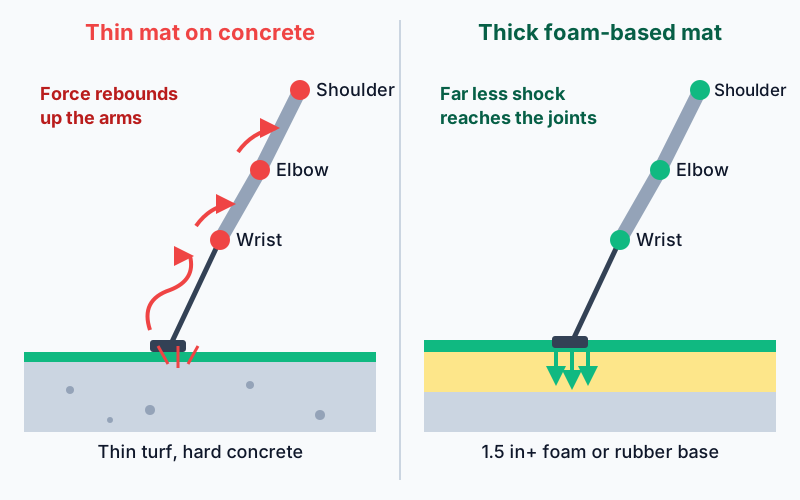
This is where joint protection lives. A thin mat on concrete is essentially the same as hitting off concrete. Every impact reverberates through the club, into your hands, up your wrists, through your elbows, and into your shoulders.
Quality mats are at least 1.5 inches thick with a dense rubber or foam base. The base absorbs downward force so your body does not have to. If you plan to practise daily, treat this as a health decision rather than an optional extra.
Feedback Honesty
The best hitting mats let you feel the difference between a clean strike and a fat one. On real grass, a fat shot digs into the turf. You feel it. You see the divot. On a hard, flat mat, a fat shot bounces the club off the surface and the ball still goes forward. You hit two inches behind it and think you flushed it.
This is the hidden danger of cheap mats. They reward bad contact. Over hundreds of sessions, your brain learns that the fat strike is fine. Then you get on a real course and chunk everything.
Owners report that mats with denser, more realistic turf fibres, like the Country Club Elite, punish fat shots with a heavier, grabbier feel through impact. You cannot quite take a divot, but you can feel when the leading edge catches turf before the ball. You need that feedback to improve your strike.
Durability
A hitting mat takes a beating. Each swing drives the clubhead into the same small area at 80-100 mph. Budget mats develop bald patches, torn fibres, and crumbling rubber bases. Premium mats are built to handle 50,000-100,000+ shots without visible wear.
The best indicator of durability is density. Closely packed, short fibres last longer than sparse, tall fibres. Rubber bases outlast foam bases for raw longevity, though foam bases win on joint protection.
Starting a home practice routine? The mat is the foundation. The habit is what builds on it. Track every session in the free Green Streak app and let the streak keep you honest.
Individual Product Reviews
Rawhide Golf Ball Co. Used Range Mat - Best Budget
This is one of the smartest purchases in home golf practice. Rawhide Golf Ball Co. sells retired commercial driving range mats, the same heavy-duty type you have been hitting off at your local range for years.
These mats are built to survive hundreds of golfers per day hitting thousands of balls per week. They are industrial grade. The nylon turf is dense and tightly woven. The rubber base is thick enough to absorb significant impact. They weigh a ton, which means they do not slide on concrete or patio surfaces.
Yes, they are used. They will show wear. The turf might be slightly matted in the most-hit areas. But that is cosmetic. The functional life remaining in a retired range mat far exceeds what you will get from a brand-new budget mat at the same price.
Rawhide ships mainly within the US; in the UK, expect to pay ~£40-60 for a similar retired range mat. That is an excellent deal. You are getting commercial-grade equipment at consumer prices. The mats typically measure around 4x5 feet or 5x5 feet, giving you a full stance and hitting area.
Pros:
- Commercial-grade durability that outlasts consumer mats
- Heavy rubber base grips any surface and absorbs impact
- Full stance area on most models
- Very affordable for the quality
- Authentic range feel
Cons:
- Cosmetic wear and discolouration from previous use
- No choice in turf type or colour; you get what is available
- Heavy and difficult to move once placed
- No rubber tee holder, so you will need standalone rubber tees
- Feedback on fat shots is limited (standard range mat behaviour)
Best For: Budget-conscious golfers who want durability above all else. If you care about function over form, this is the mat. Pair it with a golf net and you have a complete hitting bay for under £120.
GoSports Golf Hitting Mat - Best Entry Level
The GoSports mat is a popular entry-level hitting mat on Amazon, and it earns that by getting the basics right without overcomplicating things.
The mat features a clean artificial turf surface mounted on a rubber base. A built-in rubber tee holder sits at one end for driver and wood practice. The turf is polypropylene-based: softer than nylon, but with the expected trade-off in long-term durability.
At around £45, this is the mat for golfers setting up their first home hitting station. It is light enough to move between the garage and the garden. The rubber base grips well on hard surfaces. Owners describe the overall feel as pleasant enough for regular practice without being remarkable in any single area.
Going by owner feedback, this mat does its job. Owners report the turf mats down after 6-12 months of daily use. Feedback on fat shots is limited, because the surface is forgiving in a way that does not always help your game. But for the price, it removes the barrier to starting home practice today.
Pros:
- Affordable, widely available entry point
- Built-in rubber tee holder
- Lightweight and portable
- Clean, presentable design
- Rubber base prevents sliding
Cons:
- Polypropylene turf mats down with heavy daily use
- Limited feedback on strike quality
- Thinner base offers less joint protection than premium options
- Not sized for a full stance (most models are 2x3 feet)
Best For: Beginners and golfers who want to start practising at home without a significant investment. A great first mat to pair with the complete guide to practising golf at home.
Fiberbuilt Flight Deck - Best for Joints
The Fiberbuilt Flight Deck is the mat I recommend to every golfer over 40, every golfer with a history of wrist or elbow issues, and every golfer who plans to hit more than 100 balls per week at home.
Its design is fundamentally different from every other mat on this list. Instead of mounting turf on a hard rubber base, Fiberbuilt plants short nylon grass fibres into a foam platform. When your club strikes the surface, it passes through the turf and into the foam, compressing it just like a club compresses real earth beneath real grass.
On paper, the result is the most joint-friendly hitting experience available from any artificial surface, and owners consistently report dramatically better shock absorption than rubber-based mats. Owner reviews include golfers who had given up range practice due to wrist pain and resumed daily hitting on the Flight Deck. That is the foam platform doing its job.
The trade-off is durability in the traditional sense. The turf panels are replaceable (Fiberbuilt sells them separately), and they do wear faster than dense nylon mats under heavy use. But the replaceable panel design means you never bin the whole mat. You swap the worn section and carry on.
At ~£150, the Flight Deck sits in the mid-premium range. Replacement turf panels run around £30-45. For golfers who value longevity of their body over longevity of the mat, this is the clear winner.
Pros:
- Best-in-class joint protection from foam base design
- Club passes through turf like real ground
- Replaceable turf panels extend the mat's total lifespan
- Stable, weighted base
- Better feedback on fat shots than rubber-based mats
Cons:
- Turf panels wear faster than solid nylon mats
- Replacement panels add ongoing cost
- Compact hitting area (standard model is a single panel)
- Premium price for the base unit
- Foam can get waterlogged if left outdoors in rain
Best For: Golfers prioritising joint health and longevity. If you have ever felt wrist or elbow pain after a range session, this is the mat to look at first. Essential for anyone following an off-season practice plan that involves high-volume indoor hitting.
TrueStrike Golf Mat - Best Premium
TrueStrike is a UK-engineered mat that approaches the hitting mat problem differently from anyone else. Its signature feature is a gel-filled divot section beneath the hitting area.
When you strike down on the TrueStrike, the turf surface deflects into the gel layer, simulating a real divot. Fat shots feel fat because the club digs into the gel. Thin shots skip because the club catches the top of the surface. By design, and according to reviewers, this is the most realistic feedback of any hitting mat on this list.
The mat also features a moveable ball tray that lets you adjust the ball position across the gel divot strip. You can practise different ball positions for different clubs without moving your stance, by sliding the tray left or right.
Build quality is aimed at the top end. The aluminium frame, commercial-grade turf and gel subsurface are designed for heavy use at places like golf academies and driving ranges.
At ~£350-700, this is a serious investment. But for golfers who practise daily and want honest feedback from every strike, it is the mat on this list most likely to tell you about a bad one.
Pros:
- Gel-filled divot section provides the most realistic strike feedback available
- Fat shots feel clearly different from clean strikes
- Moveable ball tray for adjustable ball position
- Commercial-grade build quality and materials
- Designed for golf academies and institutional use
Cons:
- Premium price is a significant barrier for recreational golfers
- Heavy and not easily portable
- Gel section requires occasional maintenance
- Availability outside the UK and Europe can be limited
- Overkill for beginners who have not yet established a practice habit
Best For: Serious, low-handicap golfers and aspiring competitors who need their practice surface to challenge them honestly. If you are building a DIY golf simulator, this is the mat to anchor it.
Country Club Elite Real Feel Mat - Best Overall
The Country Club Elite earns the top spot by doing everything well and nothing poorly. For me, it balances realistic feedback, joint protection, durability and price better than anything else here.
The turf is a proprietary dense fibre blend that owners say feels noticeably different from standard nylon or polypropylene mats. The fibres are closely packed and upright, designed to interact with the club more like real fairway grass than a flat-surface mat. Owners report that fat shots grab and clean strikes slide through.
The base is thick rubber, heavy enough to stay planted on any surface and dense enough to absorb meaningful impact. It is not as joint-friendly as the Fiberbuilt's foam platform, but it is significantly better than thin budget mats. Owners report hitting 100-200 balls per session without discomfort.
The mat comes in multiple sizes, from a compact 3x4 to a generous 4x5 and even 5x5 for golfers who want a full stance area with room to spare. The larger models are very heavy. Once placed, they are not moving without effort.
At ~£190-260 depending on size, the Country Club Elite sits at the high end of the mid-range. It costs less than the TrueStrike, more than the Fiberbuilt, and delivers a combination of qualities that makes it the right choice for the widest range of golfers.
Pros:
- Most realistic turf feel in its price range
- Dense fibre construction provides honest strike feedback
- Thick rubber base for good joint protection and stability
- Multiple size options for different spaces
- Excellent durability, lasting years of daily use
Cons:
- Higher price than entry-level options
- Heavy in larger sizes, so not portable
- Still not as joint-friendly as the Fiberbuilt Flight Deck
- Can be difficult to find in stock (often backordered)
- Fibres can hold moisture if left outdoors
Best For: The golfer who wants one mat that covers everything. Realistic enough for serious practice, protective enough for daily use, and durable enough to justify the investment. This is my top recommendation for many golfers.
Rukket Tri-Turf Mat - Best Multi-Surface
The Rukket Tri-Turf gives you three distinct hitting surfaces in one portable mat: a tight fairway turf, a longer rough simulation, and a rubber tee line for driver practice.
The fairway section uses short, dense nylon fibres. Owners describe it as firm and fast, giving reasonable feedback on iron strikes. The rough section uses longer, softer fibres that, owners say, catch the club slightly. It is nowhere near real rough, but enough to feel the difference. The tee line holds rubber tees securely for wood and driver work.
At ~£60, the Tri-Turf is the most versatile mat in the budget range. It does not excel at any single thing the way the Country Club Elite excels at turf feel or the Fiberbuilt excels at joint protection. But it covers more practice scenarios than any other mat at twice the price.
The base is standard rubber. It is thinner than premium mats, so joint protection is moderate rather than excellent. The overall dimensions are compact, roughly 25x16 inches, so this is a hitting-only mat. You stand beside it, not on it.
Pros:
- Three hitting surfaces for varied practice
- Rubber tee line for driver and wood practice
- Affordable and widely available
- Lightweight and portable for garden use
- Good variety for golfers working on different lies
Cons:
- Compact size, with no room for a full stance
- Thinner base offers less joint protection
- Rough simulation is modest and feels little like real rough
- Individual turf sections are small
- Long-term durability is moderate
Best For: Golfers who want to practise different lies without buying multiple mats. A solid choice for garden practice sessions and a good complement to a full-size stance mat. Pairs naturally with the essential garden golf practice equipment setup.
Detailed Comparison Table
| Product | Price | Size Options | Turf Type | Base | Joint Protection | Feedback Quality | Tee Holder | |---------|-------|-------------|-----------|------|-----------------|-----------------|------------| | Rawhide Range Mat | £ (~£40-60) | 4x5, 5x5 ft | Nylon (commercial) | Thick rubber | Good | Moderate | No (standalone tees) | | GoSports Hitting Mat | £ (~£45) | 2x3 ft | Polypropylene | Rubber | Moderate | Limited | Yes (built-in) | | Rukket Tri-Turf | ££ (~£60) | 25x16 in | Nylon/Poly blend (x3) | Thin rubber | Moderate | Moderate | Yes (rubber tee line) | | Fiberbuilt Flight Deck | £££ (~£150) | Single panel | Nylon on foam | Foam platform | Excellent | Good | No (standalone tees) | | Country Club Elite | £££ (~£190-260) | 3x4 to 5x5 ft | Dense proprietary fibre | Thick rubber | Good-Very Good | Very Good | No (standalone tees) | | TrueStrike | ££££ (~£350-700) | Standard frame | Commercial nylon + gel | Aluminium/gel | Very Good | Excellent | Moveable tray |
Budget Breakdown by Price Tier
Budget Tier (£)
The Rawhide Used Range Mat (~£40-60) and GoSports Hitting Mat (~£45) live here. The Rawhide is the better long-term value, with commercial-grade durability at a consumer price. The GoSports is cleaner out of the box and includes a tee holder. Either one gets you hitting at home tonight.
Best move at this tier: Buy the Rawhide mat, a bag of rubber tees, and a budget hitting net. Total investment under £120 for a complete practice bay.
Mid-Range Tier (££)
The Rukket Tri-Turf at ~£60 occupies the low end of this tier on its own. It is the best option for golfers who want variety without a major investment. Consider pairing it with a larger stance mat for a complete setup.
Mid-Premium Tier (£££)
The Fiberbuilt Flight Deck (~£150) and Country Club Elite (~£190-260) represent the sweet spot for golfers who practise regularly. The Fiberbuilt is the choice if joint protection is your priority. The Country Club Elite is the choice if turf realism and overall quality matter most. Both last years and both justify their prices within months of consistent use.
Premium Tier (££££)
The TrueStrike at ~£350-700 is for golfers who already know they practise daily and want the best feedback available. It is the centrepiece of a serious home simulator or practice studio. Buy this only after you have proven the habit. A £350 mat gathering dust is a far more expensive mistake than a £45 mat gathering dust.
How to Protect Your Joints
This section matters. A common story in home-practice forums is the golfer who builds a home hitting bay, practises enthusiastically for two months, and then stops because their wrists, elbows, or shoulders cannot take it. The mat is usually the problem.
Why Mats Cause Joint Pain
When you strike a golf ball on real grass, the clubhead passes through the ball and then into soft ground. The earth absorbs the downward force. Your body barely notices.
When you strike a ball on a thin mat over concrete, the clubhead hits the ball and then slams into an unyielding surface. All that downward force rebounds through the shaft, into the grip, through your hands, up your wrists, past your elbows, and into your shoulders. One swing is fine. A hundred swings a day, five days a week, for three months can lead to wrist or elbow problems such as tendinitis or golfer's elbow.
How to Minimise the Damage
Choose a thick mat. This is the single most important decision. A mat with at least 1.5 inches of rubber or foam base absorbs significantly more force than a thin mat. The Fiberbuilt Flight Deck is the benchmark here.
Add cushioning underneath. If your mat sits on concrete, place a layer of rubber stable matting (the kind used in horse stalls, available at agricultural supply stores for £30-40 per sheet) underneath your hitting mat. This adds a meaningful extra layer of shock absorption. Some golfers stack two layers.
Limit daily volume. If your mat is thin and you cannot upgrade immediately, cap your sessions at 50-60 balls and take a rest day between sessions. Green Streak lets you schedule rest days without breaking your streak, and a rest day is better than a wrist injury that stops practice entirely.
Warm up your wrists. Five minutes of wrist circles, flexion stretches, and light grip squeezes before each session reduces injury risk. The golf stretches and exercises guide covers a full warm-up routine.
Listen to pain. Dull ache in the wrists or elbows after hitting is not "toughness." It is your body telling you the surface is too hard. Switch to a softer mat, add underlayment, or reduce volume before the problem becomes chronic.
Joint Protection by Mat
| Mat | Joint Protection Rating | Notes | |-----|------------------------|-------| | Fiberbuilt Flight Deck | Excellent | Foam base absorbs force like real ground | | TrueStrike | Very Good | Gel subsurface provides significant cushioning | | Country Club Elite | Good-Very Good | Thick rubber base, dense turf absorbs some force | | Rawhide Range Mat | Good | Commercial rubber base provides decent protection | | Rukket Tri-Turf | Moderate | Thinner base, consider adding underlayment | | GoSports Hitting Mat | Moderate | Thinner base, add rubber mat underneath |
Mat Size Guide
Hitting mats range from compact strip mats to full-size practice stations. Here is what each size suits.
Small (2x3 ft / Strip Mats)
Hitting zone only. You stand on the floor or on a separate stance mat beside the turf strip. These work for tight spaces and budget setups. The GoSports and Rukket Tri-Turf fall into this category.
Medium (3x3 ft / 3x4 ft)
Enough room for a ball and partial stance. Your lead foot sits on the mat; your trail foot may sit on the floor. This is the minimum I would recommend for comfortable iron practice.
Large (4x4 ft / 3x5 ft)
Full stance for the average golfer. Both feet on the mat, ball centred, room to adjust ball position for different clubs. The larger Country Club Elite sizes suit this category. This size works well in garages and dedicated practice spaces.
Extra Large (5x5 ft)
Full stance plus margin. Room to move the ball position across the mat, practise different stances, and even set up for left-handed swings if needed. The Rawhide range mats often arrive in this size. Heavy, permanent, and the most comfortable practice experience.
Rule of thumb: Buy the largest mat your space allows. A bigger mat means more forgiveness in your setup, less floor damage from mishits, and a more comfortable practice experience overall.
Indoor vs Outdoor Use
Indoor Use (Garage, Basement, Spare Room)
Many hitting mats are designed for indoor use on hard surfaces. Rubber-backed mats grip concrete and tile well. The main considerations indoors are ceiling height (measure your swing arc with your longest club), ventilation (a garage with the door cracked works), and flooring protection.
Place a sheet of plywood or rubber matting under your hitting mat to protect the floor from mishits and the pressure of the mat's weight over time. This also adds a cushioning layer for joint protection.
Indoor practice pairs naturally with a DIY golf simulator build or a simple net setup for year-round hitting regardless of weather.
Outdoor Use (Garden, Patio, Deck)
Any rubber-based hitting mat can be used outdoors, but moisture is the enemy. Rain soaks into turf fibres and the mat base, promoting mould and accelerating deterioration. Foam-based mats like the Fiberbuilt are particularly vulnerable to water damage.
If you practise outdoors, store the mat inside or under cover when not in use. A simple tarp or garden storage box extends the mat's life considerably. The Rawhide commercial range mats handle weather better than consumer mats because their industrial construction was designed for outdoor range use.
For garden setups, check the essential garden golf practice equipment guide for a complete outdoor practice station blueprint.
How Club Interaction Differs From Real Turf
This is something every golfer hitting off mats needs to understand. The mat will lie to you in specific, predictable ways.
Fat Shots Are Forgiven
On real turf, a fat shot digs the leading edge into the ground 1-3 inches behind the ball. You feel it. The ball goes nowhere. On most mats, a fat shot bounces the club off the hard surface and into the ball. The ball launches forward. You think you made good contact.
This is the single biggest problem with mat practice. The fix is choosing a mat with honest feedback (the Country Club Elite and TrueStrike are best here) and developing awareness. If you feel any vibration or resistance before the ball, the shot was fat. Do not let the ball flight fool you.
Divots Do Not Exist
On a course, your divot tells you a lot: depth, direction and where it started relative to the ball. On a mat, there is no divot. You lose that feedback channel entirely.
Compensate by using impact spray or foot powder on the club face. The strike pattern on the face tells you about contact quality in the absence of a divot. Toe strikes, heel strikes, thin strikes, and centred strikes all leave distinct marks.
Lies Are Always Perfect
Every ball on a mat sits on a perfect lie. No sidehill, downhill, uphill, or buried lies. This means mat practice overrepresents flat-lie conditions. Supplement your mat work with course play and short-game practice on real grass whenever possible.
The Bounce Effect
Your wedges have a design feature called bounce: the angle of the sole that stops the leading edge digging into turf. On real grass, bounce works naturally. On mats, the hard surface amplifies bounce, causing the club to skip off the surface. This can make your wedge practice feel different from real conditions.
The Fiberbuilt Flight Deck and TrueStrike minimise this issue because their softer subsurfaces allow the club to interact more naturally. On harder mats, be aware that your wedge distances may differ from real-grass conditions.
Pairing Your Mat With a Hitting Net
A hitting mat without a net is like a putter without a hole. You need somewhere to send the ball.
For a complete home hitting bay, pair your mat with a net from the best golf nets guide. The two purchases together form the foundation of home full-swing practice.
Recommended Mat-Net Pairings
Budget Setup (~£85-105): Rawhide Range Mat (~£40-60) + GoSports Hitting Net (~£45). Commercial-grade mat with a budget net. Use foam balls for indoor safety.
Mid-Range Setup (~£550-620): Country Club Elite (~£190-260) + Spornia SPG-7 (~£360). The best overall mat with the best overall net. This is the setup I recommend for many golfers.
Premium Setup (~£1,050-1,400+): TrueStrike (~£350-700) + Net Return Pro Series V2 (~£700). The most realistic feedback here, with a net guaranteed for 250,000 shots. Add a launch monitor and you have a very capable practice studio.
Rubber Tee Compatibility
Most mats accept standard rubber tees pushed into the turf surface. Some mats include dedicated rubber tee holders moulded into the base. If your mat does not have a built-in tee holder, buy a pack of 3-inch rubber tees. They push into any nylon or polypropylene turf surface and sit at the right height for driver and fairway wood practice.
Avoid using wooden tees on hitting mats. They splinter, they do not hold firmly in artificial turf, and the broken pieces end up in the turf fibres permanently.
Final Verdict by Category
| Category | Winner | Why | |----------|--------|-----| | Best Overall | Country Club Elite Real Feel | Best balance of feedback, durability, and joint protection | | Best Budget | Rawhide Golf Ball Co. Used Range Mat | Commercial-grade mat at consumer pricing | | Best Entry Level | GoSports Golf Hitting Mat | Simple, affordable, available tomorrow | | Best for Joints | Fiberbuilt Flight Deck | Foam platform absorbs force best | | Best Premium | TrueStrike Golf Mat | Gel divot strip provides unmatched strike feedback | | Best Multi-Surface | Rukket Tri-Turf | Three surfaces, one mat, one budget |
If I could only recommend one mat, it would be the Country Club Elite. It does the most things well for the widest range of golfers. But if joint protection is your main concern, as it should be if you are over 40 or practising daily, look hard at the Fiberbuilt Flight Deck.
The mat you buy matters less than how often you use it. Fifteen minutes of daily iron practice on any decent hitting mat is likely to do more for your ball striking than a weekly range session. Build the habit first. Upgrade the equipment later.
The 19th Hole: It is a familiar story in home practice threads. A golfer spends their first couple of years hitting off a thin, cheap mat over paving slabs in the back garden, assuming the ache in the lead wrist is just part of the deal. It is not. A £30 mat that costs you months of limited practice due to wrist soreness is not a bargain next to a £250 mat you can hit off pain-free every day. The "expensive" option often turns out to be the cheap one. If I were buying today, I would spend the extra money from the start. If you are reading this with sore wrists after a mat session, please do not ignore it. Your body is telling you the surface is wrong. Fix the mat before the mat fixes you.
Sources & Further Reading
- MyGolfSpy Equipment Testing: independent, data-driven reviews and hitting mat comparisons
- GolfWRX Forums: community feedback and long-term ownership reports on hitting mats
- TrueStrike Official: product details and technology behind the gel divot system
- Fiberbuilt Golf: foam-base mat technology and replacement panel information
- Golf Digest Equipment Reviews: professional gear evaluations and buying guides
- r/golf Community: real-world user reviews and home practice setup discussions
Related Articles
- Best Golf Nets for Garage Practice
- How to Build a DIY Golf Simulator at Home
- The Complete Guide to Practicing Golf at Home
- Best Putting Mats for Home Practice
- Best Golf Training Aids That Actually Work
- Essential Golf Practice Equipment for Your Garden
Frequently Asked Questions
What is the difference between a hitting mat and a putting mat
A hitting mat has thick, durable turf mounted on a dense rubber or foam base. It is designed to withstand the force of full iron and driver swings. A putting mat has a thin, smooth surface designed to replicate green speed for rolling putts. You cannot hit full shots off a putting mat, because the club would tear the surface. Nor can you putt properly on a hitting mat, as the surface is too thick and textured for the ball to roll true. They are separate products for separate jobs.
Can golf hitting mats damage my clubs
Low-quality mats with thin, sparse turf can cause minor sole wear on irons over time because the club contacts the hard rubber base directly. Premium mats with dense turf and thick bases minimise this. The wear is comparable to hitting off firm, dry fairways. Your clubs will not suffer meaningful damage from a quality mat. If you notice metal shavings or significant sole scratching, your mat is too thin and needs upgrading.
How thick should a golf hitting mat be
A minimum of 1.5 inches total (turf plus base) for occasional practice. For daily practice, 2 inches or more provides meaningfully better joint protection. The Fiberbuilt Flight Deck and Country Club Elite both exceed this threshold. If you practise on a mat thinner than 1 inch over concrete, add rubber stable matting underneath to compensate.
Do golf mats hide fat shots
Yes. This is the most common criticism of mat practice and it is valid. Many mats bounce the club off a hard surface and into the ball even when you strike 1-2 inches behind it. The TrueStrike's gel divot section and the Country Club Elite's dense fibre turf both provide better fat-shot feedback than standard mats. Regardless of which mat you use, pay attention to feel and sound at impact. If you sense resistance or vibration before the ball, the strike was fat, even if the ball flew forward.
Is it worth buying a premium golf hitting mat
For golfers who practise 3 or more times per week, yes. A £190-260 mat that lasts five years costs roughly £1 per week. A £45 mat that needs replacing every 6-12 months costs more over the same period and provides worse feedback and joint protection throughout. Premium mats pay for themselves in durability alone. The better feedback is a bonus that helps you improve your strike.
Can I use a golf hitting mat on grass
You can, but there is not much point. The mat sits on top of the grass, elevating your hitting surface above your feet. This changes your stance angle and ball position. If you have access to grass, hit off the grass. Hitting mats are designed for hard, flat surfaces where grass is not available, such as garages, patios, basements and decking. The exception is if you want to protect a specific patch of lawn from divot damage, in which case a mat on grass works as a turf-saver.
Disclaimer: This article is for informational purposes only and does not replace professional golf instruction. Individual results will vary based on ability, practice consistency, and physical condition. Green Streak may earn a commission from qualifying purchases made through affiliate links, at no additional cost to you. Consult a PGA professional for personalised swing advice.
Ready to build your practice streak?
Track your sessions, set goals, and improve with Green Streak — completely free.
Get Started Free