Best Golf Nets for Garage Practice: Compared and Ranked
A home net removes most excuses to skip practice. I compared seven golf nets for garage use, from budget pop-ups to simulator-grade cages.
This article contains affiliate links. I earn a small commission from purchases through these links. It helps keep Green Streak free and costs you nothing extra.
Quick Summary
- A home net removes the friction: no weather, no travel and no bucket fees, so you can practise on any evening
- Spornia SPG-7 is my best overall pick: little to no bounceback, a 30-second setup, and it's one of the nets most often recommended on r/golf and GolfWRX
- Budget nets work fine with foam balls: a net under £75 plus limited-flight balls gets you most of the benefit for much less money
- Log your sessions: the free Green Streak app records each practice session and keeps your streak going
A golf net in your garage takes away most of the reasons to skip practice. There's no weather to wait out, no drive to the range and no bucket to pay for. You pick up a club and swing.
Quick Answer: My pick for garage practice is the Spornia SPG-7. Its auto ball return, pop-up frame and low-bounceback netting make daily sessions easy to start. On a budget, the GoSports Hitting Net with foam balls is a sensible first net. For a permanent build, look at the Net Return Pro Series V2, which carries a 250,000-shot guarantee. Whichever you buy, what matters most is using it regularly, even for 15 minutes.
Table of Contents
- Quick-Pick Summary Table
- What Should I Look for in a Golf Net
- Individual Net Reviews
- Detailed Comparison Table
- Is a Cheap Golf Net Worth the Money
- How to Set Up a Garage Hitting Bay Safely
- Do I Need a Launch Monitor With My Golf Net
- Final Verdict by Category
- Sources & Further Reading
- Related Articles
- Frequently Asked Questions
Quick-Pick Summary Table
| Category | Product | Price | Key Feature | Best For | |----------|---------|-------|-------------|----------| | Best Overall | Spornia SPG-7 | £££ | Auto ball return, zero bounceback | Daily garage practice | | Best Budget | GoSports Hitting Net | £ | Lightweight, fast assembly | Beginners on a budget | | Best Premium | Net Return Pro Series V2 | ££££ | 250k shot guarantee, ball return | Permanent simulator builds | | Best Wide Coverage | Rukkett Haack Golf Net | ££ | 10ft wide frame | Golfers who shank occasionally | | Best Pop-Up | Spornia SPG-5 | ££ | Compact fold, instant setup | Small garages | | Best Cage Style | Gagalileo Golf Cage | ££ | Full enclosure, side protection | High ball speed players | | Best for Chipping | Callaway Tri-Ball Hitting Net | £ | Multi-target face | Short game practice |
Price key: £ under £75, ££ £75-£250, £££ £250-£500, ££££ over £500.
What Should I Look for in a Golf Net
Nets vary a lot in build quality. I compared every net in this guide against seven criteria, using published specs, independent reviews and owner feedback.
Bounceback Protection
This is the factor I'd put first. A net that bounces balls back at you is dangerous. The better nets absorb the impact and drop the ball at your feet. Cheaper flat-face nets tend to ricochet, especially at faster swing speeds. If your driver ball speed is over 130 mph, choose a net built to absorb high-speed impact.
Setup and Teardown Time
A net that takes 20 minutes to assemble tends to collect dust. Pop-up designs like the Spornia range set up in under 60 seconds. Frame-and-net designs (like the Net Return) take 10-15 minutes the first time, then stay assembled. If the net shares space with a car, fast teardown matters.
Durability and Shot Capacity
Budget nets typically handle 10,000-30,000 shots before the netting weakens. Mid-range nets stretch to 50,000-100,000 shots, and the Net Return Pro V2 guarantees 250,000. At 50-100 balls a day, a budget net might last 6-12 months. A premium net should last years.
Size and Garage Fit
Garage ceilings are often lower than you think, and a low ceiling rules out full driver swings for taller golfers. Measure your ceiling and swing arc before buying. The nets in this guide range from 5 to 10 feet (1.5 to 3 m) wide. Wider is better for catching off-centre hits.
Noise Level
A garage echoes, and late-night sessions will test your household's patience. Nets with softer netting and ball-return systems tend to be quieter than rigid frame models. If noise is a dealbreaker, foam practice balls cut it right down.
Portability
Some golfers want a net they can move between the garage, the garden and the boot of the car. Pop-up nets weigh 10-15 lbs and fold into carry bags. Cage-style nets weigh 30-50 lbs and stay put.
Value for Money
The cheapest net isn't always the best value. A £50 net that lasts 6 months can cost more per year than a £350 net that lasts 5 years. I factored in replacement netting, durability ratings and features when ranking value.
Want to make this stick? A new net only helps if you use it. Log each session in the free Green Streak app and let the streak keep you coming back.
Individual Net Reviews
Spornia SPG-7 - Best Overall
The Spornia SPG-7 comes up again and again in online golf communities. It deals with the two biggest problems with indoor nets: bounceback and setup time.
The netting absorbs the ball and rolls it gently back to your feet, so you're not chasing balls across the garage floor. Setup takes about 30 seconds. Folded, it fits behind a door or along a wall.
It ships with a roof attachment for catching high wedge shots, which many competitors don't include. Ceiling dents from lob wedges are a real problem in garages with low ceilings.
Pros:
- Little to no bounceback, with auto ball return
- 30-second pop-up setup
- Roof attachment catches wedge shots
- Replacement nets available from Spornia directly
Cons:
- Pricier than basic flat-face nets
- Owners report the pop-up mechanism can be stiff when new
- Owners report netting wear after 50,000+ shots at high ball speeds
Best For: The golfer who wants a daily-use net that's quick to get going. You set it up, hit balls and fold it away.
Net Return Pro Series V2 - Best Premium
The Net Return is the net many simulator builders aim for. Its patented curved netting returns each ball to your feet, with no separate tray and no manual collection.
The aluminium frame is light, and owners report it holds firm under impact. Net Return guarantees 250,000 shots, which is 5-10 years of daily practice for many golfers.
Pros:
- 250,000-shot guarantee
- Automatic ball return (best in class)
- Professional appearance suits simulator rooms
- Lightweight yet sturdy aluminium frame
Cons:
- Premium price puts it out of reach for casual users
- Requires 10-15 minutes for initial assembly
- Not designed for quick teardown
Best For: Golfers building a dedicated simulator space or permanent garage bay. If you are investing in a launch monitor and projector, this is the net to match that commitment.
GoSports Golf Practice Hitting Net - Best Budget
Spending less doesn't mean settling for rubbish. The GoSports net gets the basics right, with a metal frame, decent netting and a target face for aim practice.
The catch is that it's a flat-face net, so bounceback is real, especially at faster swing speeds. I'd pair it with foam practice balls or "Almost Golf" limited-flight balls. That deals with the safety issue and lets you swing freely indoors.
Pros:
- Affordable entry point for home practice
- Lightweight and portable
- Quick assembly
- Target face adds practice focus
Cons:
- Ball bounceback with real golf balls at high speeds
- Netting wears faster than mid-range alternatives
- No ball return feature
Best For: Beginners and budget-conscious golfers who want to start hitting at home without a major investment. Pair with foam balls for safe indoor use.
Rukkett Haack Golf Net - Best Wide Coverage
Designed with input from SEC golf coach Chris Haack, the Rukkett net measures 10 feet wide. That extra width catches shanks, pulls and pushes that would miss a standard 7-foot net.
The cage-style design wraps netting around the sides to give you a safety buffer. If you're still working on consistent contact, that makes it much easier to swing at full speed.
Pros:
- 10ft width catches off-centre hits
- Cage design with side protection
- Solid build quality for the price
- Good for all swing speeds
Cons:
- Larger footprint requires more garage space
- Takes longer to set up than pop-up designs
- No ball return system
Best For: Golfers who fight shanks or inconsistent contact. It also suits households where several people use the net, as the wide frame forgives different misses. If you are working on fixing your slice, this width gives you room to miss safely.
Spornia SPG-5 - Best for Small Garages
The SPG-5 is the SPG-7's compact sibling. It has the same pop-up mechanism and ball-return netting in a smaller frame.
If your garage barely fits a car and a mat, the SPG-5 slots into a corner and folds flat for storage. It gives up some width compared with the SPG-7 but keeps low bounceback and quick setup.
Pros:
- Same ball-return tech as the SPG-7
- Ultra-compact when folded
- Fits single-car garages
- Fast setup
Cons:
- Narrower hitting area
- Less forgiving on off-centre misses
- Slightly shorter height
Best For: Golfers with limited garage space who still want daily access to a quality practice net.
Gagalileo Golf Cage - Best Full Enclosure
The Gagalileo cage wraps netting around every side, like a batting cage. Shanks, skulled wedges and the occasional complete miss all stay inside.
That matters if you have a higher ball speed or hit real golf balls indoors. With a full enclosure, you can stop worrying about stray shots.
Pros:
- Full side and top protection
- Handles high ball speeds safely
- Sturdy steel frame
- Budget-friendly for a cage design
Cons:
- Largest footprint on this list
- Permanent setup only (not portable)
- Basic netting material at this price point
- No ball return
Best For: High-speed swingers who want full protection. Good for garages dedicated entirely to golf practice.
Callaway Tri-Ball Hitting Net - Best for Short Game
Many golf nets are built for full swings. The Callaway Tri-Ball has a multi-target face designed for chipping and pitching.
Three target areas let you practise different trajectories and landing zones. It folds flat and weighs very little. It isn't built for 150 mph driver speed, but it works well for wedge work and short-game sessions.
Pros:
- Multi-target face for short game focus
- Extremely lightweight and portable
- Affordable
- Great for garden chipping sessions
Cons:
- Not designed for full-swing driver practice
- Lighter frame shows wear over time
- Limited protection area
Best For: Golfers who want to sharpen their short game at home. Pairs well with a larger net for a complete home practice setup.
Building a practice habit? Use the free Green Streak app to log every session and watch your streak grow.
Detailed Comparison Table
| Product | Price | Size | Ball Return | Setup Time | Best For | Durability | |---------|-------|------|-------------|------------|----------|------------| | Spornia SPG-7 | £££ | 7ft x 7ft | Yes (auto) | 30 seconds | Daily practice | 50,000+ shots | | Net Return Pro V2 | ££££ | 8ft x 8ft | Yes (auto) | 10-15 min (one-time) | Simulator builds | 250,000 shots | | GoSports Hitting Net | £ | 7ft x 7ft | No | 5 minutes | Budget buyers | 10,000-20,000 shots | | Rukkett Haack | ££ | 10ft x 7ft | No | 10 minutes | Wide coverage | 30,000-50,000 shots | | Spornia SPG-5 | ££ | 5ft x 5ft | Yes (auto) | 30 seconds | Small spaces | 40,000+ shots | | Gagalileo Cage | ££ | 10ft x 10ft x 10ft | No | 20-30 minutes | Full protection | 30,000-50,000 shots | | Callaway Tri-Ball | £ | 6ft x 6ft | No | 2 minutes | Short game | 10,000-15,000 shots |
The 19th Hole: I haven't tested these nets myself, but the feedback on r/golf and GolfWRX points one way. The golfers who improve aren't the ones who buy the most expensive net. They buy any decent net and then use it regularly. A pattern I see often in those communities is someone posting a new net in January, then going quiet by March. The net was rarely the problem. The habit was.
Is a Cheap Golf Net Worth the Money
Price alone doesn't decide whether a golf net is good value. Here's how the tiers break down.
Budget Tier (£)
The GoSports Hitting Net and Callaway Tri-Ball sit here. Spread over their lifespan, they cost less per month than a single range session. The trade-off is durability and bounceback risk. Paired with foam balls, they work well for 6-12 months.
Best move at this tier: Buy a budget net plus a bag of foam practice balls. The total stays under £100, and you can start practising tonight.
Mid-Range Tier (££)
The Rukkett Haack, Spornia SPG-5 and Gagalileo Cage sit here. You get better netting, wider coverage and a longer lifespan. If you plan to practise 3-5 times a week, I think this tier gives the best cost per session.
Premium Tier (£££-££££)
The Spornia SPG-7 and Net Return Pro V2 are bigger purchases. The SPG-7 suits golfers who want quick setup for daily use. The Net Return suits dedicated simulator builds where the net stays up permanently.
The maths is simple. A range session costs £8-£15 in bucket fees, so a ~£350 net like the SPG-7 pays for itself in 25-45 sessions. At 3 sessions a week, that's 2-4 months to break even.
How to Set Up a Garage Hitting Bay Safely
Buying the net is step one. Setting it up so nothing breaks, including you, is step two.
The Shank Buffer Zone
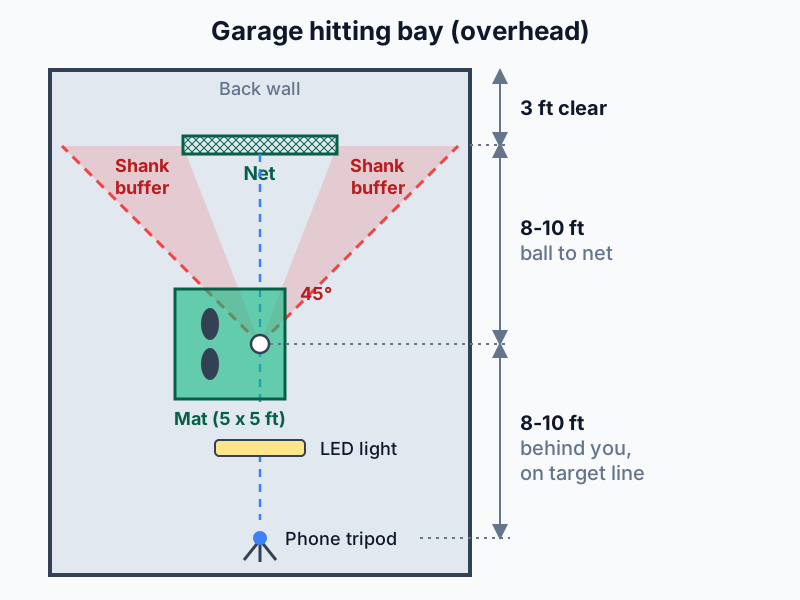
Don't trust your swing completely. Even tour professionals shank the ball. Keep anything fragile out of a 45-degree angle to either side of your stance. That means cars, windows, water heaters and anything else you can't afford to replace.
If your garage is tight, use foam balls. Full-flight golf balls in a confined space carry real risk even with a quality net.
Hitting Mat Selection
Hitting off concrete is hard on your wrists and your clubs, so you need a hitting mat. Strip mats (narrow, ball only) work for tight budgets. Full stance mats (5ft x 5ft) give better stability and let you practise different stances and ball positions.
Look for a mat with a rubber base that grips concrete. Thin mats slide on impact, which disrupts your swing and wears the mat out faster.
Ceiling Clearance Check
Measure from your hitting position. Stand on your mat with your driver and make a slow-motion backswing. If the clubhead touches the ceiling, you can grip down or stick to irons and wedges in the garage. A wedge-only bay is still well worth having, as a large share of your strokes are played inside 100 yards.
Lighting and Camera Setup
Good lighting matters more than you'd expect. Shadows can hide your ball position and make video hard to review. A single LED shop light above and behind your hitting position works well.
Mount a phone tripod at hand height, 8-10 feet behind you along the target line. Recording and reviewing your swing gives each session a purpose. It pairs well with the Seinfeld Strategy approach to daily practice: you keep an eye on your swing and your streak at the same time.
Do I Need a Launch Monitor With My Golf Net
A net without feedback feels like putting with your eyes closed. You know you hit the ball, but you don't know where it went.
Launch monitors fill that gap by measuring ball speed, launch angle, spin rate and carry distance. That turns a net session from mindless hitting into structured practice. The question is how much feedback you need.
Budget Feedback Options
A phone camera in slow motion gives you swing feedback for free. At 240fps, many modern phones show your body positions clearly and give a rough view of club path. Combine this with a DIY simulator build and you have plenty of feedback without spending thousands.
Dedicated Launch Monitors
If you want numbers, portable launch monitors at around £450-£650 (Garmin Approach R10, Rapsodo MLM2PRO) give you distance, direction and spin data. Tour-level units from Bushnell (Launch Pro / GC3) cost significantly more but give club and ball data accurate enough for serious fitting and practice.
My view is that a budget net plus free video beats a £500 launch monitor you rarely use. Buy the net first and build the habit, then upgrade the tech later. If you are curious about tracking tech for the course, check out the best golf GPS watches too.
Final Verdict by Category
| Category | Winner | Why | |----------|--------|-----| | Best Overall | Spornia SPG-7 | Zero bounceback, instant setup, auto ball return | | Best Budget | GoSports Hitting Net | Gets you hitting at home for minimal cost | | Best Premium | Net Return Pro Series V2 | Built to last years, perfect for simulator setups | | Best Wide Coverage | Rukkett Haack | 10ft width catches everything | | Best Small Space | Spornia SPG-5 | Same quality in a compact frame | | Best Full Protection | Gagalileo Cage | Nothing escapes the enclosure | | Best Short Game | Callaway Tri-Ball | Multi-target face for chipping precision |
If I could only buy one net, it would be the Spornia SPG-7. The 30-second setup removes the biggest barrier to daily practice, and regular practice is what changes your game. A net you don't use is just expensive storage.
Start where your budget allows. A budget net with foam balls tonight beats a dream setup that sits in the "eventually" pile for six months.
If you're working towards your first milestones, a home setup you use regularly can help on the road to breaking 100. Fifteen minutes a day with your net builds repetition and confidence you can take to the course.
Sources & Further Reading
- MyGolfSpy Equipment Testing - Independent, data-driven gear reviews and net comparisons
- GolfWRX Forums - Community feedback and long-term ownership reports on golf nets
- r/golf Community - Real-world user reviews and garage setup discussions
- Golf Digest Equipment Reviews - Professional gear evaluations and buying guides
Related Articles
- The Seinfeld Strategy: Why "Don't Break the Chain" Works for Golf Practice
- How to Build a DIY Golf Simulator at Home
- Best Golf GPS Watches: Garmin vs Bushnell vs Shot Scope Compared
- How to Break 100 in Golf: A Step-by-Step Guide
- The 5-Minute Golf Warm-Up Routine That Actually Works
Frequently Asked Questions
How long do golf nets last with daily use
A budget net (under £75) typically lasts 6-12 months with daily use at moderate swing speeds. Mid-range nets (£75-£250) hold up for 1-3 years. The Net Return Pro V2 guarantees 250,000 shots, which works out at 5-10 years of daily practice. Netting material and ball speed are the two biggest factors in how long a net lasts.
Can I use real golf balls in a garage net
Yes, but only with nets rated for full-speed impact. Budget flat-face nets can bounce real balls back dangerously at high swing speeds. The Spornia SPG-7 and Net Return Pro V2 are designed for real balls. If you're unsure about your net, use limited-flight or foam balls. You're making the same swing either way.
What size golf net fits a standard garage
A typical two-car garage has the floor space for a 7ft x 7ft net. Leave at least 3 feet (1 m) behind the net, plus the hitting distance your net's manufacturer recommends in front of it (often 8-10 feet). Ceiling height is usually the limiting factor, so measure it carefully. Taller golfers may not have room for a full driver backswing.
Do golf nets damage garage floors
The net itself doesn't, but a club striking bare concrete can chip the floor and damage the club. Always use a hitting mat to absorb the downward force of your swing. A rubber-backed mat also protects your wrists from the shock of hitting off a hard surface.
Are pop-up golf nets as good as frame nets
Pop-up nets like the Spornia range work well for daily use when you need quick setup. Frame nets like the Net Return are more durable and stable for permanent installations. The trade-off is convenience against longevity. Pop-up nets suit shared spaces where the net must come down, and frame nets suit dedicated practice rooms.
How far should I stand from my golf net
Many manufacturers recommend 8-10 feet between you and the net for full-swing practice. That gives the ball room to reach the netting on a natural trajectory while keeping your setup compact. For chipping and pitching, you can stand closer. Always check the manufacturer's recommended distance for your specific net.
Can I practise chipping into a full-size golf net
You can, but a full-size net doesn't tell you much about chipping trajectory or where the ball would land. Short-game nets with target zones (like the Callaway Tri-Ball) give better feedback. A combination works well: a large net for full swings and a target net for the short game. A 5-minute warm-up routine with wedges before a full session is a good way to fit short-game work in.
What is the best golf net under £100
My pick under £100 is the GoSports Hitting Net. It has a solid frame, a target face and enough durability for regular practice with foam or limited-flight balls. For chipping, the Callaway Tri-Ball is another sub-£100 option worth considering. At this price, budget for replacement netting or foam balls to extend the net's life.
Disclaimer: This article is for informational purposes only and does not replace professional golf instruction. Individual results will vary based on ability, practice consistency, and physical condition. Consult a PGA professional for personalised swing advice.
Ready to build your practice streak?
Track your sessions, set goals, and improve with Green Streak — completely free.
Get Started Free