Best Putting Mats for Home Practice: Compared and Ranked
I compared 6 putting mats from £15 to £225 on surface speed, alignment aids, and durability. Find the best putting mat for your budget and space.
This article contains affiliate links. I earn a small commission from purchases through these links. It helps keep Green Streak free and costs you nothing extra.
Quick Summary
- Putts make up a big share of every round, yet many golfers own nothing to practise the one skill they can train properly at home
- The Perfect Practice Putting Mat is my best overall pick: a true-rolling surface, a ball return and an alignment line for around £130
- A £60 mat gets you most of the benefit: the PUTT-A-BOUT Grassroots Par Three is the sweet spot if you just need to start putting at home
- Log your putting sessions in the free Green Streak app and let the streak keep the mat in use
You have a putter, a living room floor and ten minutes before dinner. That's enough to start sharpening the part of the game where many golfers drop the most shots. All you need is something better than carpet.
Prices are typical UK prices as of September 2026 and change often.
Quick Answer: My pick for most golfers is the Perfect Practice Putting Mat (~£130). Its crystal velvet surface is reported to roll at around 10-11 on the stimpmeter. The alignment line helps you groove a consistent stroke, and the ball return keeps you putting instead of fetching. On a budget, start with the PUTT-A-BOUT Grassroots Par Three (~£60), which gives you a reliable surface for far less. Whichever you choose, regular short sessions are what make it pay off.
Table of Contents
- Quick-Pick Summary Table
- What Should I Look for in a Putting Mat
- Individual Putting Mat Reviews
- Detailed Comparison Table
- Is a Ball Return Worth It
- Carpet vs Putting Mat vs Practice Green
- Budget Breakdown by Price Tier
- How to Get the Most From Your Putting Mat
- Final Verdict by Category
- Sources & Further Reading
- Related Articles
- Frequently Asked Questions
Quick-Pick Summary Table
| Category | Product | Price | Key Feature | Best For | |----------|---------|-------|-------------|----------| | Best Overall | Perfect Practice Putting Mat | £££ (~£130) | Crystal velvet surface + ball return | Golfers who want one mat that does everything | | Best Budget | PUTT-A-BOUT Grassroots Par Three | ££ (~£60) | Consistent nap, kidney-shaped green | Budget-conscious daily practice | | Best Training Mat | WELLPUTT Mat 10ft | £££ (~£115) | Printed alignment and distance guides | Drill-focused players who want structure | | Best True Roll | BirdieBall Putting Green | £££ (~£115) | Simulated true-roll surface | Golfers chasing realistic green speed | | Best Premium | Big Moss Original EX1 | ££££ (~£225) | Professional-grade surface + break | Dedicated putting studios | | Best Ultra-Budget | Basic Amazon Roll-Up Mat | £ (~£15) | Cheap, available tomorrow | Testing whether you will actually use a mat |
What Should I Look for in a Putting Mat
Putting mats vary a lot. A bad one teaches bad habits, while a good one turns your living room into a proper practice green. Here's what separates them.
Surface Speed and Stimpmeter Equivalent
The stimpmeter measures green speed: the higher the number, the faster the green. Tour greens are much quicker than the greens most club golfers play week to week. The better putting mats aim for something in the 9-11 range.
Cheap mats often roll too fast or too slow. A mat that runs at 13 or more teaches you a touch you won't need on real greens. A mat that runs at 6 encourages a jabbing stroke. You want a surface that feels like a well-kept club green.
Width and Length
Putting mats range from about 9 inches to 3 feet wide, and I'd go wider if you can. A narrow mat makes you line up the same way every time. That sounds good until you realise you never practise putts from different angles.
Length matters too. A 10-foot mat gives you room for 3-foot, 6-foot and 8-foot putts. Anything shorter than 7 feet limits you to short putts only.
Alignment Aids and Training Guides
Some mats print alignment lines, gate markers or distance zones straight onto the surface. These are useful for structured practice, and the WELLPUTT mat is the best example. Others leave the surface blank, which works fine if you bring your own training aids.
Ball Return Mechanism
A ball return feeds the ball back to you after it drops in the cup. It sounds like a luxury, but it isn't. Without one, you putt, walk to the other end, pick up the ball, walk back and reset.
That friction eats into your practice. With a ball return, you putt, the ball rolls back and you go again, so you fit far more putts into a session.
Durability and Storage
Thicker mats last longer but are harder to store. Thin roll-up mats slide into a cupboard but wear out faster. The best mats have a rubber backing that grips the floor. If your mat slides on every stroke, you'll soon stop using it.
Got your eye on a mat? Don't let it gather dust in the spare room. Log each putting session in the free Green Streak app and build the daily habit that gets it used.
Individual Putting Mat Reviews
PUTT-A-BOUT Grassroots Par Three - Best Budget
The PUTT-A-BOUT is one of the most popular putting mats on Amazon for good reason. At roughly £60, it removes the cost excuse for not practising at home.
The kidney-shaped design gives you three holes at different distances and angles. Owners report the surface rolls reasonably true, at around stimp 9. It isn't tour quality, but it's consistent enough to build a repeatable stroke.
The mat is 9 feet long and just over 3 feet wide. That gives you room for varied putt lengths without taking over the room. It rolls up for storage, though owners report the edges can curl after repeated rolling. The usual fix is to lay it flat for a day after unboxing.
In my view, a £60 mat does most of what a £225 mat does. The surface is less refined, and there are no alignment guides or ball return. For plain putting repetition, though, it works.
Pros:
- Affordable entry point for home putting
- Three holes for varied putt lengths and angles
- Consistent surface for the price
- Rolls up for easy storage
Cons:
- Edges curl after repeated storage
- No alignment aids printed on surface
- No ball return mechanism
- Surface wears faster than premium options
Best For: Golfers who want to start putting at home tonight without overthinking it. Pair it with drills from the best putting drills at home guide and you have a complete practice setup for under £70.
WELLPUTT Mat 10ft - Best Training Mat
The WELLPUTT takes a different approach. Rather than copying a green, it works as a training station. The whole surface is printed with alignment lines, distance markers, gate positions and drill zones.
This is the mat for golfers who want structured practice. Each zone matches a specific drill, so the printed guides take the guesswork out of your setup. You roll it out, pick a drill zone and start putting with alignment feedback on every stroke.
The surface is reported to roll at roughly stimp 10. The mat is narrow at around 20 inches wide, which is the trade-off for its 10-foot length. It rolls up tightly and fits into a carry tube, so you can take it to a hotel room if you travel for work.
Pros:
- Printed alignment guides and drill zones
- 10-foot length for varied putt distances
- Portable with carry tube
- Good surface speed (stimp ~10)
Cons:
- Narrow width limits angle practice
- No ball return
- Some owners find the printed guides cluttered
- Premium price for what is essentially a thin mat
Best For: The drill-focused golfer who wants built-in structure. If you follow the golf putting drills as a set routine, this mat turns each session into guided practice.
Perfect Practice Putting Mat - Best Overall
The Perfect Practice mat is the one Dustin Johnson endorses as the brand's ambassador. Endorsement aside, the mat has earned its reputation on merit.
The crystal velvet surface is reported to roll at around stimp 10-11. That sits between typical club greens and tour-speed greens. Owners regularly rate the feel above budget mats and say it carries over well to real grass.
The built-in ball return is the standout feature. Sink a putt and the ball rolls back to your feet via a wooden ramp. Miss, and the ball stays at the cup end. You know straight away whether you holed it, and your next ball is already waiting.
An alignment line runs down the centre of the mat. A putting mirror or a tee gate adds more structure. At ~£130, it sits in the mid-range price band. For me, it offers the best mix of surface quality, training features and ball return on this list.
Pros:
- Crystal velvet surface with realistic roll
- Built-in ball return for high-rep practice
- Centre alignment line for stroke training
- Good length (9.5 feet) for varied distances
Cons:
- Owners report the ball return ramp can be noisy on hard floors
- Mat is heavier than roll-up alternatives
- Alignment line is single centre line only
- Tour-pro endorsement adds a slight premium
Best For: The golfer who wants one mat that covers surface quality, ball return and alignment. This is my top recommendation for most golfers.
BirdieBall Putting Green - Best True Roll Feel
The BirdieBall green is different from every other mat here. Instead of fabric or velvet, it uses a proprietary foam surface designed to mimic the feel of bent grass greens.
Owners often describe it as the closest thing to putting on a real green indoors. The ball slows down the way it does on a well-kept course. Stimp is quoted at around 10-11, depending on the surface option you choose.
The green comes in panels that connect together. You can build a 4-foot by 8-foot green or a 4-foot by 12-foot green, depending on your space. You can even create break by placing shims under the panels.
At ~£115, it's priced close to the Perfect Practice and well below the Big Moss. The modular panels are both its biggest strength and its biggest limitation. Owners report they connect cleanly, but the seams are visible and you can feel them slightly under the ball.
Pros:
- Most realistic putting surface on this list
- Modular panels for custom size and shape
- Can create break with shims
- Durable foam construction
Cons:
- Panel seams slightly visible and detectable
- No ball return
- No alignment aids
- Larger footprint than roll-up mats
Best For: Golfers who put surface realism above everything else. If you want indoor putting to feel as close to outdoor putting as possible, this is the one.
Building a putting routine? The mat is only the tool, and the habit is what makes it work. Use the free Green Streak app to log every session and let the streak keep you accountable.
Big Moss Original EX1 - Best Premium
The Big Moss is what you buy when putting practice is a long-term commitment rather than a phase. At ~£225, it's a permanent fixture in a room, not something you roll up after each session.
On paper, the surface is professional grade. Stimp is quoted at roughly 11-12, which matches fast club greens and approaches tour speed. Owners report the texture is even across the surface with no dead spots, and that consistency helps you build a reliable stroke.
The EX1 model includes a subtle built-in break option. You can add undulation beneath the mat to practise sidehill putts, which no budget or mid-range mat offers.
The mat measures 3 feet wide by 12 feet long. That covers everything from tap-ins to 10-footers, and the width lets you vary your angles and starting positions.
Pros:
- Professional-grade surface quality
- Built-in break option for sidehill practice
- 12-foot length for all putt distances
- Extremely durable (lasts years)
Cons:
- Premium price is a real barrier
- Not portable: stays where you put it
- No ball return included
- Overkill for casual practice
Best For: Golfers with a dedicated putting space who practise daily and want tour-level surface quality. It pairs well with a complete home practice setup that includes a hitting net and training aids.
Basic Amazon Roll-Up Mat - Best Ultra-Budget
You'll have seen these: thin, green roll-up mats that turn up on Amazon for ~£15 with a small plastic cup at one end.
Owner reviews tell a consistent story, and it isn't a good one. The surface is uneven, and the oversized plastic cup gives you false confidence. The mat slides on hardwood, and the ball bounces off seams and wrinkles.
So why is it on this list? Because a £15 mat you use beats a £225 mat you never buy. If you're not sure home putting practice is for you, £15 is a low-risk experiment. Use it consistently for a month, then upgrade to the PUTT-A-BOUT or Perfect Practice. If it gathers dust, you've avoided a bigger mistake.
Pros:
- Costs less than a bucket of range balls
- Available with next-day delivery
- Zero commitment, zero risk
- Proves whether you will actually practise
Cons:
- Inconsistent surface speed
- Slides on smooth floors
- Oversized cup gives unrealistic results
- Wears out within weeks of regular use
Best For: The golfer who isn't sure they'll practise at home. Buy it, use it for two weeks, then decide whether to spend more. It's a trial run for the habit.
The 19th Hole: Read the putting-mat threads on r/golf and GolfWRX and you'll find plenty of golfers weighing up mats for weeks, reading every review and comparison. Meanwhile, the golfer who grabbed a £60 PUTT-A-BOUT on impulse is already putting every evening. I think the mat matters far less than the habit. Showing up regularly will do more for you than an extra point on the stimpmeter.
Detailed Comparison Table
| Product | Price | Length | Width | Surface Speed (Stimp) | Ball Return | Alignment Aids | Portability | |---------|-------|--------|-------|----------------------|-------------|----------------|-------------| | PUTT-A-BOUT Grassroots | ££ (~£60) | 9 ft | 3 ft | ~9 | No | No | Rolls up (some curling) | | WELLPUTT Mat 10ft | £££ (~£115) | 10 ft | 20 in | ~10 | No | Yes (printed drills) | Carry tube included | | Perfect Practice | £££ (~£130) | 9.5 ft | 14 in | ~10-11 | Yes (wooden ramp) | Yes (centre line) | Moderate (heavier) | | BirdieBall Putting Green | £££ (~£115) | 8-12 ft | 4 ft | ~10-11 | No | No | Modular panels | | Big Moss Original EX1 | ££££ (~£225) | 12 ft | 3 ft | ~11-12 | No | No | Not portable | | Basic Amazon Roll-Up | £ (~£15) | 6-8 ft | 12 in | Inconsistent | Plastic cup | No | Very portable |
Is a Ball Return Worth It
This question comes up a lot, and the answer depends on how you practise.
A ball return matters most for high-volume putting sessions. If you want to hit 50-100 putts in 15 minutes, walking to the cup and back after each one gets in the way. The Perfect Practice ball return keeps you in position, putter in hand, ready for the next stroke.
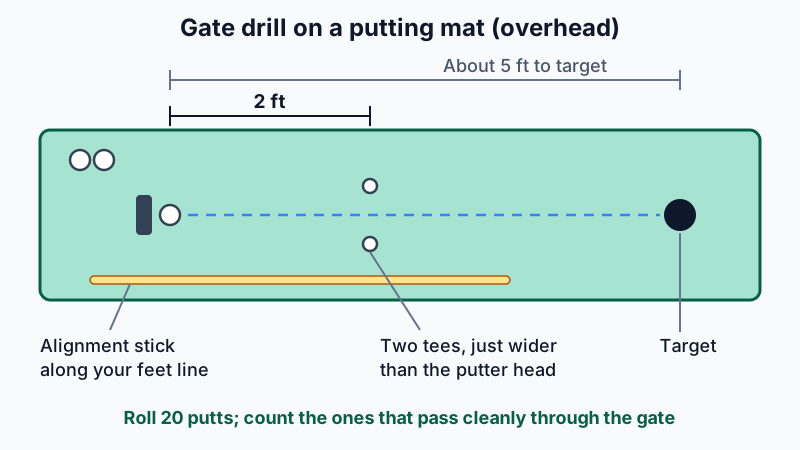
A ball return isn't essential, though. Plenty of good drills have you putt several balls from the same spot and then walk up to check the grouping. The gate drill, ladder drill, and clock drill all work well on mats without a ball return.
My advice: if it's your first mat, don't let the lack of a ball return put you off. If you're upgrading from a budget mat and you already practise regularly, a ball return is a quality-of-life upgrade worth paying for.
Carpet vs Putting Mat vs Practice Green
Some golfers skip the mat and putt on the living room carpet. Others build a practice green in the garden. Here's how the options compare.
Putting on Carpet
Carpet is free and available right now, and it's better than nothing. It lets you work on stroke mechanics, alignment and start line. It won't teach speed control, because carpet speed varies so much from green speed.
Low-pile carpet is usable for basic stroke work. High-pile carpet makes the ball wobble and skip. Neither behaves like a real green.
Putting on a Mat
A dedicated mat gives you consistent speed, a defined target and a surface made for golf balls. Even a £60 mat is a big step up from carpet because the ball rolls predictably. That makes your feedback trustworthy. On carpet, you can't tell whether a miss was your stroke or the surface.
Backyard Practice Green
A professionally installed practice green costs £4,000-£12,000 depending on size. Synthetic turf greens from SYNLawn or Tour Greens roll beautifully and last a decade. If you have the budget and the space, an outdoor green is as good as home putting gets.
For many golfers, a £60-£130 mat indoors is the practical choice. It works all year whatever the weather, needs no maintenance and gives you most of the practice benefit for a fraction of the cost.
Budget Breakdown by Price Tier
Ultra-Budget Tier (£)
The ~£15 Amazon roll-up mat. Buy it if you're not sure you'll use a putting mat at all. Treat it as an experiment rather than an investment, and replace it within a month if you stick with practice.
Budget Tier (££)
The PUTT-A-BOUT Grassroots at ~£60 is the best value on the list. You get a reliable surface, three holes and enough space for real practice. For many golfers, it's all you need. Combine it with dedicated putting drills and you have a solid home setup.
Mid-Range Tier (£££)
The WELLPUTT (~£115), Perfect Practice (~£130) and BirdieBall (~£115) all sit here, and each suits a different priority. The WELLPUTT is for structured drill work. The Perfect Practice is the all-rounder with a ball return. The BirdieBall is for surface realism. Pick the one that matches how you practise.
Premium Tier (££££)
The Big Moss at ~£225. Only buy this if you have a dedicated space and a daily putting habit already in place. On paper the surface is better, but the gain over a £££ mat is small. Your stroke mechanics won't know the difference between a £130 surface and a £225 one.
How to Get the Most From Your Putting Mat
Owning a putting mat does nothing on its own. Using it regularly is what counts. Here's how to get more from yours.
Pair Your Mat With Drills
Random putting is better than none, and structured putting is better than random putting. The best putting drills at home guide covers ten drills that work on any mat. Start with the gate drill for alignment and the ladder drill for speed control.
Set Up a Permanent Station
If you have room, leave your mat out. A mat rolled up in a cupboard adds friction every time you want to use it. A mat left out in your office or spare room invites 5-minute putting breaks during the day, and those short sessions add up.
Track Your Sessions
A common problem with home practice equipment is that nobody keeps track of using it. You buy the mat, use it hard for a week, then forget it exists. Logging each session in Green Streak gives you some accountability. When you've built a 14-day practice streak, you'll want to protect it.
Vary Your Practice
Don't putt to the same target from the same spot every time. Move your starting position and change the distance. Add a gate drill, or practise lag putts to a towel instead of a cup. Varied practice builds a skill you can adapt on the course, while repeating one putt builds a narrow one.
Add a Putting Mirror
A putting mirror costs £10-£20 and sits on top of your mat. It shows your eye position, shoulder alignment and putter path at address. Of all the accessories you could add to a good mat, I'd pick the mirror first. Many golf training aids go well with a putting mat, but the mirror gives you the most feedback for the money.
Final Verdict by Category
| Category | Winner | Why | |----------|--------|-----| | Best Overall | Perfect Practice Putting Mat | Ball return, good surface, alignment line | | Best Budget | PUTT-A-BOUT Grassroots Par Three | Most of the benefit at a fraction of the cost | | Best Training Mat | WELLPUTT Mat 10ft | Built-in drill guides for structured practice | | Best True Roll | BirdieBall Putting Green | Closest surface to real bent grass | | Best Premium | Big Moss Original EX1 | Tour-speed surface with break options | | Best Ultra-Budget | Basic Amazon Roll-Up | Low-risk trial for uncommitted golfers |
If I could only recommend one mat, it would be the Perfect Practice. For me, the ball return alone justifies the extra cost over the PUTT-A-BOUT. If £130 feels like a lot before you know you'll use it, start with the PUTT-A-BOUT at £60 and upgrade later.
The mat isn't the bottleneck; the habit is. I'd back 15 minutes a day on any mat over an upgrade in surface quality. The mat itself costs less than a single green fee at many courses.
Start putting tonight, log it tomorrow and build a streak that makes the mat worth the money.
Sources & Further Reading
- MyGolfSpy Equipment Testing: Independent, data-driven reviews and putting mat comparisons
- GolfWRX Forums: Community feedback and long-term ownership reports on putting mats
- PGA of America Teaching Resources: Professional putting instruction methodology
- Golf Digest Equipment Reviews: Professional gear evaluations and buying guides
- Perfect Practice: Manufacturer site, including Dustin Johnson's endorsement of the mat
- Shea et al. (2000), "Spacing Practice Sessions Across Days Benefits the Learning of Motor Skills," Human Movement Science: Why short sessions spread across days beat one long session
Related Articles
- Best Putting Drills at Home: 10 Drills for Speed and Start Line
- Golf Putting Drills: 10 Drills to Eliminate Three-Putts
- The Complete Guide to Practicing Golf at Home
- Best Golf Training Aids That Actually Work
- Best Golf Nets for Garage Practice: Compared and Ranked
- Best Golf Launch Monitors for Home Practice
Frequently Asked Questions
What stimpmeter speed should a putting mat be
Aim for a mat that rolls at stimp 9-11. That range is close to well-kept club greens and gives you realistic speed feedback. Mats slower than 8 encourage a jabbing stroke, and mats faster than 12 teach a touch that's too delicate for many courses. The Perfect Practice and BirdieBall are both quoted in the 10-11 range.
Can I improve my putting on a mat at home
Yes. A putting mat gives you consistent feedback that carpet can't. Structured drills matter more than mindless rolling, so pair your mat with the gate drill and the ladder drill.
How long should a putting mat be
At least 8 feet gives you room for meaningful practice. I'd go for 10 feet, because it covers everything from 3-foot confidence putts to 8-foot mid-range putts. Anything shorter than 7 feet limits you to short putts, which won't build the speed control you need for lag putting on a real green.
Is the Perfect Practice putting mat worth it
If you practise putting at least three times a week, I think so. The ball return saves you walking after every putt, so you fit more putts into each session. Owners regularly rate the surface above budget mats. If you'll use it often, £130 is money well spent.
Do putting mats damage hardwood floors
Not if the mat has a rubber or felt backing. Many quality putting mats are designed to sit flat without scratching. Avoid mats with hard plastic bases or exposed edges, and put a thin rug pad underneath if you're worried. The bigger risk is denting the floor with a ball if you miss the mat during chip-and-putt practice.
How often should I practise putting at home
Fifteen minutes a day is a sensible target. Short daily sessions beat one long weekly session because spacing practice across days helps motor skills stick. Even 5 minutes of focused gate drill work beats skipping a day. Consistency matters more than volume.
What is the difference between a putting mat and a hitting mat
A putting mat has a smooth, low-friction surface designed to copy green speed for rolling putts. A hitting mat has a thicker, turf-like surface built to absorb club impact for full swings and chips. They do completely different jobs. Hitting irons off a putting mat will wreck it, and a hitting mat is too slow and textured for meaningful putting.
Can I make a putting mat roll faster or slower
You can change the speed by placing the mat on a different surface. A mat on hardwood rolls faster than the same mat on carpet, because the harder floor underneath creates less drag. Some golfers put thin felt or a yoga mat underneath to slow the roll. The BirdieBall panels also come in different surface options with different speeds.
Disclaimer: This article is for informational purposes only and does not replace professional golf instruction. Individual results will vary based on ability, practice consistency, and physical condition. Consult a PGA professional for personalised swing advice.
Ready to build your practice streak?
Track your sessions, set goals, and improve with Green Streak — completely free.
Get Started Free