How to Grip a Golf Club: The Complete Beginner's Guide
Many swing faults start with the grip. Learn the 3 grip types, correct hand placement, and a 5-minute daily drill to build a solid golf grip from scratch.
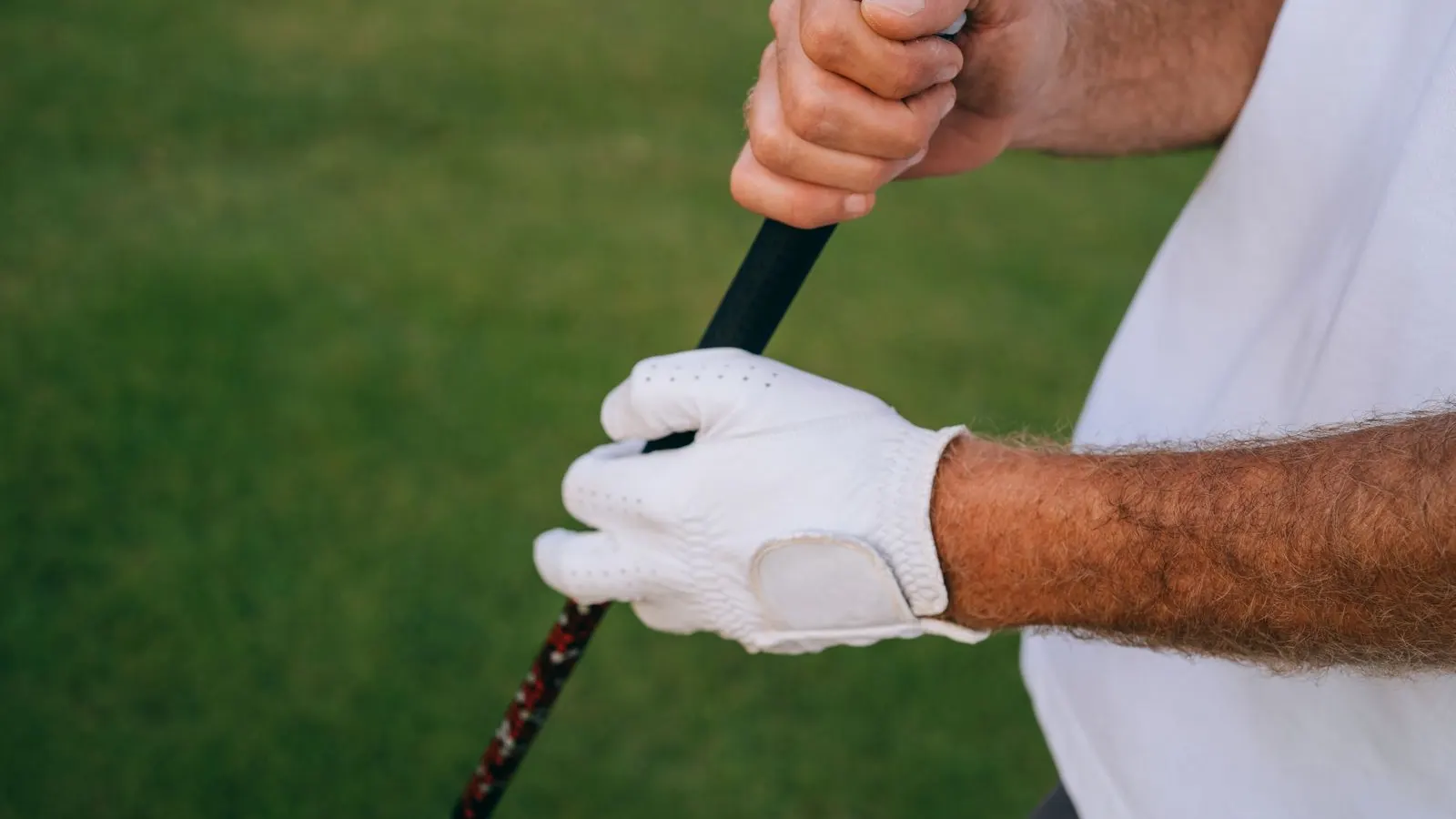
Quick Summary
- Many swing faults trace back to the grip: fixing your hands often sorts out more of your swing than you'd expect
- There are three main grip types: overlap, interlock and ten-finger, and none of them is the "best" for every golfer
- Grip pressure matters as much as grip style: many beginners squeeze far too hard, which costs them distance and accuracy
- Make it a habit: log your grip drill sessions in the free Green Streak app and keep your practice streak going
You've picked up a golf club, wrapped your hands around it however felt natural, and watched the ball fly sideways. Nobody told you there was a right way to hold the thing.
Quick Answer: Your grip is the only contact between you and the club, and many amateur faults, the slice above all, start there. Lay the club across the fingers of your lead hand (the left for right-handers), with the thumb just right of centre. Then add your trail hand using an overlap, interlock or ten-finger grip. You should see 2-2.5 knuckles on your lead hand at address. Practise for 5 minutes a day and log it in Green Streak.
Table of Contents
- Why Does the Golf Grip Matter So Much?
- Lead Hand vs Trail Hand
- How to Place Your Lead Hand on the Club
- How to Place Your Trail Hand on the Club
- The 3 Main Golf Grip Types
- What Is the Correct Grip Pressure?
- The Knuckle Test
- Neutral vs Strong vs Weak Grip
- Common Grip Mistakes Beginners Make
- The 5-Minute Daily Grip Drill Routine
- When Your Grip Is Wrong for You vs Objectively Wrong
- Sources & Further Reading
- Related Articles
- Frequently Asked Questions
Why Does the Golf Grip Matter So Much?
Your hands are the only part of your body that touches the club. That sounds obvious, but think about what it means. Everything you ask the club to do, from direction to power to angle, goes through your grip.
A bad grip forces your body to compensate during the swing. Your wrists flip, your shoulders twist the wrong way, and the clubface arrives open or closed at impact. The ball goes somewhere you didn't intend.
You can make a decent swing and still hit it crooked if your grip is wrong. The grip is the foundation, and everything else sits on top of it.
That's why so many teaching professionals check the grip before anything else. Plenty of slices and weak fades to the right start with hands in the wrong position.
The good news is that the grip is the easiest fundamental to fix. You don't need a range, a coach or any kit beyond a club. You can work on it while watching television. A full swing change can take weeks to feel natural, but you'll often notice a grip change in your ball flight much sooner.
Lead Hand vs Trail Hand
Before getting into grip types, you need to know which hand does what. This trips up a lot of new golfers, so here's the simple version.
Your lead hand is the hand closest to the target when you address the ball. For a right-handed golfer, that's the left hand. For a left-hander, it's the right hand.
Your trail hand is the hand furthest from the target. For a right-handed golfer, that's the right hand.
The lead hand has a big say in the clubface angle: whether the face is open (pointing right), closed (pointing left) or square (pointing at your target) at impact. The trail hand adds support and power, but the lead hand is the boss.
Throughout this guide, I'll describe everything for a right-handed golfer. If you play left-handed, mirror the instructions.
How to Place Your Lead Hand on the Club
This is step one. Get it right and the rest is much easier.
- Hold the club vertically in front of you with your trail hand on the shaft.
- Open your lead hand with the palm facing you.
- Lay the grip diagonally across your fingers, from the base of your index finger to the middle section of your pinky. It goes across the fingers, not the palm.
- Close your fingers around the grip. Your thumb should rest slightly to the right of the shaft, not straight down the top.
- Look down. You should see 2 to 2.5 knuckles on your lead hand.
What It Should Feel Like
The club sits mainly in the fingers, not the palm. If you feel the grip pressing into the fleshy pad at the base of your thumb, it's too far into your palm. This is the most common beginner mistake with the lead hand.
A finger grip lets you hinge your wrists (cock them up during the backswing), and that hinge is a big source of clubhead speed. A palm grip locks your wrists and costs you distance off the tee.
Beginner Tip: Grip the club and try to hinge your wrists up and down. If the movement feels free and easy, the club is in your fingers. If it feels stiff and restricted, the club is buried in your palm. Reposition and try again.
Want to make this stick? Log your daily grip practice in the free Green Streak app. A new grip only sticks if you keep coming back to it.
How to Place Your Trail Hand on the Club
With your lead hand set, the trail hand comes next. Its job is to support the lead hand without fighting it.
- Open your trail hand and look at it. You'll see a natural cup between your thumb pad and palm. That cup needs to fit over your lead thumb.
- Place the fingers of your trail hand on the underside of the grip. As with the lead hand, the grip sits in the fingers, not the palm.
- Close your trail hand so the lifeline (the fleshy pad at the base of your thumb) covers your lead thumb completely.
- Your trail thumb should sit slightly left of centre on the shaft.
The connection between the two hands matters. You don't want gaps or air pockets between them. The hands should feel like a single unit wrapped around the club.
How you connect the pinky of your trail hand to your lead hand decides which of the three grip types you're using.
The 3 Main Golf Grip Types
There are three established ways to link your hands on the club. Each has won major championships, and none is better than the others in every case. The best one for you is the grip that feels secure and lets you swing freely.
The Overlap Grip (Vardon Grip)
This one is named after Harry Vardon, the six-time Open champion who popularised it in the early 1900s. It's still widely used on tour.
How to do it: Rest the pinky of your trail hand on top of the gap between the index and middle fingers of your lead hand. The pinky sits in that groove rather than locking in.
What it feels like: The trail hand sits slightly on top of the lead hand. Your hands work together, but the lead hand clearly leads. The pinky should rest comfortably in the groove without squeezing.
Best for: Golfers with medium to large hands. If your fingers overlap without feeling stretched, this grip gives good control and feedback.
The Interlock Grip
Jack Nicklaus and Tiger Woods both used it, which is reason enough to give it a try.
How to do it: Link the pinky of your trail hand with the index finger of your lead hand, so the two fingers hook together like links in a chain.
What it feels like: The hands feel tightly connected, with less movement between them during the swing. Some golfers describe the hands becoming one unit.
Best for: Golfers with smaller hands or shorter fingers. The interlock helps smaller hands stay secure on the club without squeezing harder.
The Ten-Finger Grip (Baseball Grip)
Every finger sits on the grip, with no overlapping or interlocking. The pinky of the trail hand simply sits next to the index finger of the lead hand.
How to do it: Place all ten fingers on the grip, side by side. The trail pinky touches the lead index finger but doesn't overlap or link with it.
What it feels like: Natural and familiar. If you've ever held a cricket bat, tennis racquet or baseball bat, it will feel comfortable straight away.
Best for: Complete beginners, golfers with arthritis or sore hands, juniors, and anyone who struggles to hold the club securely. It feels the most natural and puts the most of your hands on the club.
Grip Types Comparison Table
| Feature | Overlap (Vardon) | Interlock | Ten-Finger (Baseball) | |---|---|---|---| | Hand connection | Pinky rests on top | Fingers intertwine | All fingers side by side | | Control level | Highest | High | Moderate | | Comfort for beginners | Moderate | Moderate | Highest | | Best hand size | Medium to large | Small to medium | Any size | | Wrist freedom | Good | Slightly restricted | Most freedom | | Used by (famous pros) | Ben Hogan, Phil Mickelson | Tiger Woods, Jack Nicklaus | Bob Rosburg, Scott Piercy | | Recommended starting point | Intermediate golfers | Golfers with small hands | Complete beginners |
If you're brand new to golf, start with the ten-finger grip. It removes one variable from an already complicated learning process. As you build feel and confidence, try the overlap or interlock. Plenty of golfers switch grip types in their first year before one clicks.
What Is the Correct Grip Pressure?
This is where many beginners go wrong. The hand position might be perfect, but they're strangling the club.
The 1-10 Pressure Scale
Imagine a scale from 1 to 10. A 1 means the club is about to fall out of your hands. A 10 means you're white-knuckling it with everything you've got.
Your target: 4 out of 10.
That sounds loose, and it's meant to. Sam Snead, one of the most naturally gifted golfers in history, compared good grip pressure to holding a baby bird. Firm enough that it can't fly away, gentle enough that you don't hurt it.
Why the Death Grip Kills Distance
When you squeeze the club hard, tension spreads up through your wrists, forearms and shoulders. That tension causes three problems:
- It kills wrist hinge. A tight grip stops your wrists cocking during the backswing. Less hinge means less clubhead speed (how fast the clubhead is moving at impact), and less speed means less distance.
- It slows your swing. Tight, braced muscles can't move the club as freely as relaxed ones. The swing gets shorter and jerkier, and speed drops.
- It reduces feel. You lose the sense of where the clubhead is during the swing. Good contact and touch need that feel, and a death grip smothers it.
The Pressure Test
Try this now. Pick up a club and grip it at 10 out of 10, as hard as you can. Now try to waggle the club back and forth with your wrists. It feels stiff.
Loosen to a 4 and waggle again. The clubhead moves freely and your wrists feel alive. That's what you want during the swing.
Building a grip habit? The free Green Streak app logs your daily practice sessions and keeps your streak. Five minutes of grip pressure work each morning adds up.
The Knuckle Test
The knuckle test is the quickest way to check whether your grip is set up correctly. It takes two seconds and you can do it anywhere.
How to Do the Knuckle Test
- Set up in your address position: feet shoulder-width apart, knees slightly flexed, club in front of you.
- Look down at your lead hand (the left for right-handers).
- Count the knuckles you can see.
What the Knuckle Count Tells You
- 0-1 knuckles visible: your grip is "weak". The lead hand is turned too far to the left, which makes it hard to square the clubface at impact. The usual result is a slice (the ball curves hard to the right) or a weak fade.
- 2-2.5 knuckles visible: your grip is "neutral". This is the Goldilocks zone, where the face can return to square without you manipulating it. Many teaching pros aim for this position with beginners.
- 3+ knuckles visible: your grip is "strong". The lead hand is turned to the right, which makes it easier for the face to close through impact. That helps fix a slice, but go too strong and the ball hooks left.
For a beginner, I'd start at 2 knuckles and adjust based on your ball flight. If the ball keeps curving right, strengthen the grip until you see 2.5-3 knuckles. If it hooks left, weaken it back towards 2.
The 19th Hole: Scroll through the "why do I slice?" threads on any golf forum and you'll see the same pattern. The golfer posts a swing video, and the replies argue about swing path, hip rotation and shoulder turn. Eventually someone asks for a photo of their hands at address, and there it is: one knuckle showing, club in the palm, thumb flat on top. The grip gets skipped because it's boring and doesn't look like a swing fault on video. It's still the one fundamental you can check in two seconds before hunting for anything more complicated. Check your hands before you rebuild your swing.
Neutral vs Strong vs Weak Grip
You'll hear these terms constantly. They don't describe how tightly you hold the club. They describe how far your hands are rotated on the grip.
Neutral Grip
Both hands sit in a balanced position. At address you see about 2 knuckles on your lead hand. The "V" shapes formed by your thumbs and forefingers point between your chin and your trail shoulder.
Ball flight tendency: Straight, or a slight fade or draw depending on your swing path.
Best for: Golfers who want the most control over shot shape. Many tour pros play with a neutral or slightly strong grip.
Strong Grip
Both hands are rotated to the right (for a right-handed player). You see 3 or more knuckles on your lead hand, and the "V" shapes point at or outside your trail shoulder.
Ball flight tendency: Draw to hook (the ball curves right to left for right-handed golfers), because the face tends to be closed to the path at impact.
Best for: Golfers who fight a slice. If your ball curves to the right, a slightly stronger grip is often the quickest thing to try. I cover this in detail in the slice fix guide.
Weak Grip
Both hands are rotated to the left. You see 0-1 knuckles on your lead hand, and the "V" shapes point towards your chin or lead shoulder.
Ball flight tendency: Fade to slice (the ball curves left to right), because the face tends to be open to the path at impact.
Best for: Very few golfers. Some elite players use a slightly weak grip for particular shots, but for beginners it's a common cause of sliced drives and weak iron shots.
Grip Strength and Ball Flight
| Grip Strength | Knuckles Visible | V Points Toward | Clubface Tendency | Typical Ball Flight | |---|---|---|---|---| | Weak | 0-1 | Chin or lead shoulder | Open at impact | Fade or slice (curves right) | | Neutral | 2-2.5 | Between chin and trail shoulder | Square at impact | Straight or slight fade/draw | | Strong | 3+ | Trail shoulder or beyond | Closed at impact | Draw or hook (curves left) |
Start neutral and adjust based on what the ball does. The grip is a dial, not a switch, and small rotations make a big difference.
Common Grip Mistakes Beginners Make
Watch a group of beginners pick up a club for the first time and the same mistakes show up again and again. Here are the biggest ones and how to fix each.
The Palm Grip
The mistake: Laying the club across the palm of the lead hand instead of the fingers. It feels secure because your hand wraps around the grip like a suitcase handle.
Why it's bad: It locks your wrists, so you can't hinge properly in the backswing. You lose distance and the swing feels stiff and forced.
The fix: Lay the grip diagonally across your fingers, from the base of the index finger to the middle pad of the pinky. Close your fingers first, then your hand. The club should sit where your fingers meet your palm, not deep in the palm itself.
The Death Grip
The mistake: Squeezing the club as hard as possible. Beginners often do this because they're afraid the club will fly out of their hands.
Why it's bad: Tension in the hands travels up to the wrists, forearms and shoulders, and your upper body locks up. Swing speed drops and accuracy goes with it.
The fix: Before each swing, squeeze the club to a 10, then release to a 4 on the pressure scale. This "squeeze and release" teaches your hands what relaxed feels like.
The Gap Between Hands
The mistake: Leaving a visible gap between the lead and trail hands on the grip, so the hands work separately instead of together.
Why it's bad: The hands fight each other during the swing. One overpowers the other, and the clubface angle at impact varies from shot to shot.
The fix: Make sure the lifeline pad of your trail hand covers your lead thumb completely. There should be no daylight between the hands.
The Strong Trail Hand Takeover
The mistake: Letting the trail hand turn too far under the grip. It feels powerful because the dominant hand (for most right-handers) takes over.
Why it's bad: The trail hand shuts the clubface through impact. The ball hooks left or you hit a nasty pull, and you lose control of direction.
The fix: Look down at your trail hand. The "V" formed by the thumb and forefinger should point towards your trail shoulder. If it points beyond that, turn the hand back to the left.
Gripping Too Far Down the Shaft
The mistake: Choking down so far that your hands are almost on the metal shaft instead of the rubber grip.
Why it's bad: You lose some of the club's length, which shrinks your swing arc and costs distance. The club can also feel unbalanced.
The fix: Your lead hand should sit near the butt end of the grip, with about half an inch (1 cm) of grip showing above it. Choking down an inch for extra control is fine. Much more than that and you're giving up too much.
Common Grip Mistakes and Corrections
| Mistake | What You Feel | What Happens to the Ball | The Fix | |---|---|---|---| | Palm grip | Club feels secure but locked | Weak, short shots that fade right | Move club to fingers, check wrist hinge | | Death grip (10/10 pressure) | Forearms burn, shoulders tense | Lost distance, erratic direction | Squeeze to 10, release to 4 before every swing | | Gap between hands | Hands feel separate on the club | Inconsistent direction, loss of power | Trail hand lifeline covers lead thumb, no daylight | | Trail hand too strong | Dominant hand feels powerful | Hook or pull left | Trail hand "V" points to trail shoulder, not further | | Choking down too far | Extra control feeling | Shorter shots from a smaller swing arc | Lead hand pinky near butt end of grip | | Thumb straight on top | Lead thumb pressed flat on shaft | Weak shots, poor hinge | Rotate thumb slightly right of centre |
The 5-Minute Daily Grip Drill Routine
Changing your grip takes 30 seconds. Making the new grip automatic takes daily repetition. This 5-minute routine turns a conscious effort into something you don't have to think about.
You need one thing: a golf club. No balls, no net and no space. You can do it in your living room.
Minute 1: The Grip-and-Check Drill
Place your lead hand on the club and check for 2 knuckles. Add your trail hand and check there's no gap. Let go with both hands and repeat.
Do 10 reps. Each time, look down and check the knuckle count and the join between your hands. Speed up as the position starts to feel natural.
Minute 2: The Pressure Drill
Grip the club normally. Squeeze to a 10 for 3 seconds, then relax to a 4 for 3 seconds. Repeat 5 times.
This teaches your hands the difference between too tight and just right. After a few days, you'll find the 4 out of 10 without needing the squeeze first.
Minute 3: The Waggle Drill
Hold the club with your normal grip at 4 out of 10 pressure. Waggle the clubhead back and forth by hinging your wrists. It should move freely and feel light.
If the waggle feels stiff, you're gripping too tightly or the club is too deep in your palm. Adjust and try again. Aim for 20 smooth waggles.
Minute 4: Slow-Motion Swings
Take the club to the top of your backswing in slow motion. Feel the weight of the clubhead in your fingers. Your grip pressure should stay the same, with no extra squeeze at the top.
Bring the club down slowly through the impact zone, keeping the pressure at a 4 the whole way. Do 5 slow-motion swings.
Minute 5: Eyes-Closed Grip
Close your eyes. Place your lead hand on the club from memory, then add the trail hand. Open your eyes and check the knuckles and the connection between your hands.
This trains proprioception (your body's sense of where your hands are without looking). On the course you don't stare at your grip before every shot, so you need the right position to be automatic.
Finish with 5 eyes-closed reps and count how many you set correctly. That number out of 5 is your score for the day.
Making It a Habit
Five minutes isn't much, and that's the point. A drill you'll actually do every day beats a 30-minute routine you abandon after a week.
If you're building a daily practice habit, this routine sits nicely alongside other short drills. The Seinfeld Strategy, marking an X on the calendar for every day you practise, works well here. Five minutes of grip work counts as your X.
Ready to build the streak? Log your daily grip practice in the free Green Streak app. The routine is in the drill library, and even 5 minutes counts towards your streak.
When Your Grip Is Wrong for You vs Objectively Wrong
Many beginner guides skip this. There's a difference between a grip that's technically flawed and one that simply doesn't suit your hands or swing.
Objectively Wrong Grips
Some grip positions are wrong for every golfer:
- Club deep in the palm with no finger involvement. This kills wrist action for everyone.
- Hands separated on the grip with no connection between them. The hands can't work together.
- Lead thumb pressed flat on top of the shaft. This creates a weak grip that tends to produce a slice.
If your grip matches any of these, change it. No body type or swing style benefits from them.
"Wrong for You" Grips
Some grips are technically sound but don't suit your hands or swing. For example:
- Overlap grip with very small hands. The pinky can't rest comfortably in the groove, so the interlock or ten-finger grip might suit you better.
- Interlock grip with arthritis in the fingers. The interlock puts pressure on the joints, and the ten-finger grip removes it.
- Neutral grip when your swing produces a big fade. A slightly strong grip might be the right "wrong" for you. Some tour pros use grips a textbook would call incorrect, and they still get consistent results.
How to Know the Difference
Hit 20 balls with your current grip and note the pattern. Then make a small change, turning your hands so you see a little more or less of your lead-hand knuckles, and hit 20 more.
If the adjusted grip gives you straighter shots and a more comfortable swing, your original grip was wrong for you. If things get worse, try adjusting the other way.
The grip is personal. Use this guide as your starting point, then let your ball flight be the final judge.
What Should a Beginner Golfer Learn After the Grip?
Once your grip is solid, the natural next steps are aim and alignment, then posture, then the basic swing motion.
Don't rush past the grip, though. Plenty of beginners spend 10 minutes on it and then move on to the exciting stuff: full swings, drivers and fancy wedge shots. Then they wonder why they keep topping the ball or slicing it into the next fairway.
I'd give the grip at least 2 weeks of daily 5-minute practice before adding new fundamentals. That's 70 minutes of focused grip work. It sounds like a lot of time on something boring, but it can save you a lot of frustration later.
If you're working towards breaking 100, a proper grip is step one. It comes before a new driver or a lesson on swing plane.
Sources & Further Reading
- PGA of America Teaching Resources: Professional instruction methodology and grip fundamentals for beginners
- Lally et al. (2010), "How Are Habits Formed," European Journal of Social Psychology: The habit formation study behind the 66-day figure
- Golf Digest Instruction: Grip Guides: Visual guides to grip types and common mistakes
- TrackMan Ball Flight Laws: How clubface angle at impact determines ball flight direction
- Golf Monthly: Grip Tips for Beginners: Step-by-step grip instruction from PGA professionals
Related Articles
- Fix Your Slice in 5 Minutes: The "Knuckle" Drill: How a grip change can fix the most common miss in golf
- How to Stop Topping the Golf Ball: Drills to fix another common beginner fault
- How to Break 100: The Ultimate Guide: Strategy guide for high handicappers ready to drop scores
- The Complete Guide to Practicing Golf at Home: Grip drills you can do in any room of the house
- Golf Chipping Tips: Master Your Short Game in 30 Days: Grip fundamentals carry straight into short game technique
Frequently Asked Questions
Which golf grip type is best for beginners?
The ten-finger (baseball) grip is the easiest starting point for complete beginners. It puts all ten fingers on the club, feels natural, and needs less coordination than the overlap or interlock. As you build feel over your first few months, try the other two to find what suits your hands.
How tightly should I hold a golf club?
Aim for 4 out of 10 on the pressure scale. Your hands should be firm enough to control the club but relaxed enough for your wrists to hinge freely. Sam Snead compared it to holding a baby bird. Many beginners grip far too tightly, which tenses the forearms and shoulders and costs both distance and accuracy.
How many knuckles should I see on my lead hand?
Two to two-and-a-half knuckles is the target for a neutral grip. Fewer than two suggests a weak grip, which encourages a slice. Three or more suggests a strong grip, which encourages a draw or hook. Start at two and adjust based on your ball flight.
Can a bad grip cause a slice?
Yes. A weak grip, with the lead hand turned too far left on the club, is one of the most common causes of a slice among amateur golfers. It makes the clubface hard to square at impact. Strengthening the grip until you see 2.5-3 knuckles is one of the simplest slice fixes to try.
Should I use a golf glove for better grip?
A glove on your lead hand helps stop the club slipping, especially in warm or damp conditions. It isn't compulsory, but many golfers find it makes the club feel more secure. Replace your glove when the palm turns shiny or slick. A worn glove can let the club twist in your hand during the swing.
How long does it take to get comfortable with a new grip?
A new grip will feel odd at first because your hands are used to the old position. Stick with the 5-minute daily routine for at least two weeks before judging it. Research from University College London found that new habits took a median of 66 days to become automatic, so be patient.
Does grip change with different clubs?
Your hand position stays the same for every full-swing club in the bag, from driver to wedges. What can change is grip pressure. You might hold a driver at 3-4 out of 10 for speed and a delicate pitch at 2-3 for touch. The hand placement itself shouldn't change.
Can I practise my golf grip at home?
Yes. Grip work is about the most home-friendly golf practice there is, because you need one club and no space. Hold the club while watching television, run the 5-minute routine before bed, or try the eyes-closed grip during a break at work. No ball or net required.
Disclaimer: This article is for informational purposes only and does not replace professional golf instruction. Individual results will vary based on ability, practice consistency, and physical condition. Consult a PGA professional for personalised swing advice.
Ready to build your practice streak?
Track your sessions, set goals, and improve with Green Streak — completely free.
Get Started Free