Stop Topping the Golf Ball: 5 Drills That Fix It Fast
Topping the golf ball wrecks scorecards. Learn why it happens (hint: it's rarely your head) and work on it with 5 drills you can do almost anywhere.
Quick Summary
- Topping wrecks scorecards, and "lifting your head" is rarely the real cause
- Early extension is a common culprit: your hips move towards the ball in the downswing, your spine straightens and the club rises away from the ball
- 5 targeted drills, each under 10 minutes, and three of them can be done at home without hitting a ball
- Log your drill sessions in the free Green Streak app, which keeps your scores and your practice streak
You've made a full, confident swing and you expect the ball to fly. Instead, it dribbles along the ground like a startled rabbit. Your playing partners look away, and you want the fairway to swallow you whole.
Quick Answer: Topping happens when the club strikes the top half of the ball, usually because of early extension (standing up through impact) or poor weight transfer. According to Titleist Performance Institute (TPI) screening data, 67% of the more than 90,000 golfers it has tested show early extension. To fix it, hold your spine angle and move your low point (the bottom of your swing arc) forward. The five drills below target posture, weight shift and connection.
Table of Contents
- Why Do I Keep Topping the Golf Ball?
- What Causes a Topped Shot?
- How to Diagnose Your Topped Shots
- 5 Drills to Stop Topping the Ball
- Your Weekly Practice Plan
- 5 Mistakes Golfers Make When Fixing a Top
- When to Get a Lesson
- Sources & Further Reading
- Related Articles
- Frequently Asked Questions
Why Do I Keep Topping the Golf Ball?
A topped shot feels random. One minute you're striping a 7-iron, the next you're watching it scuttle 30 yards. But topping isn't random. It has mechanical causes you can find and fix.
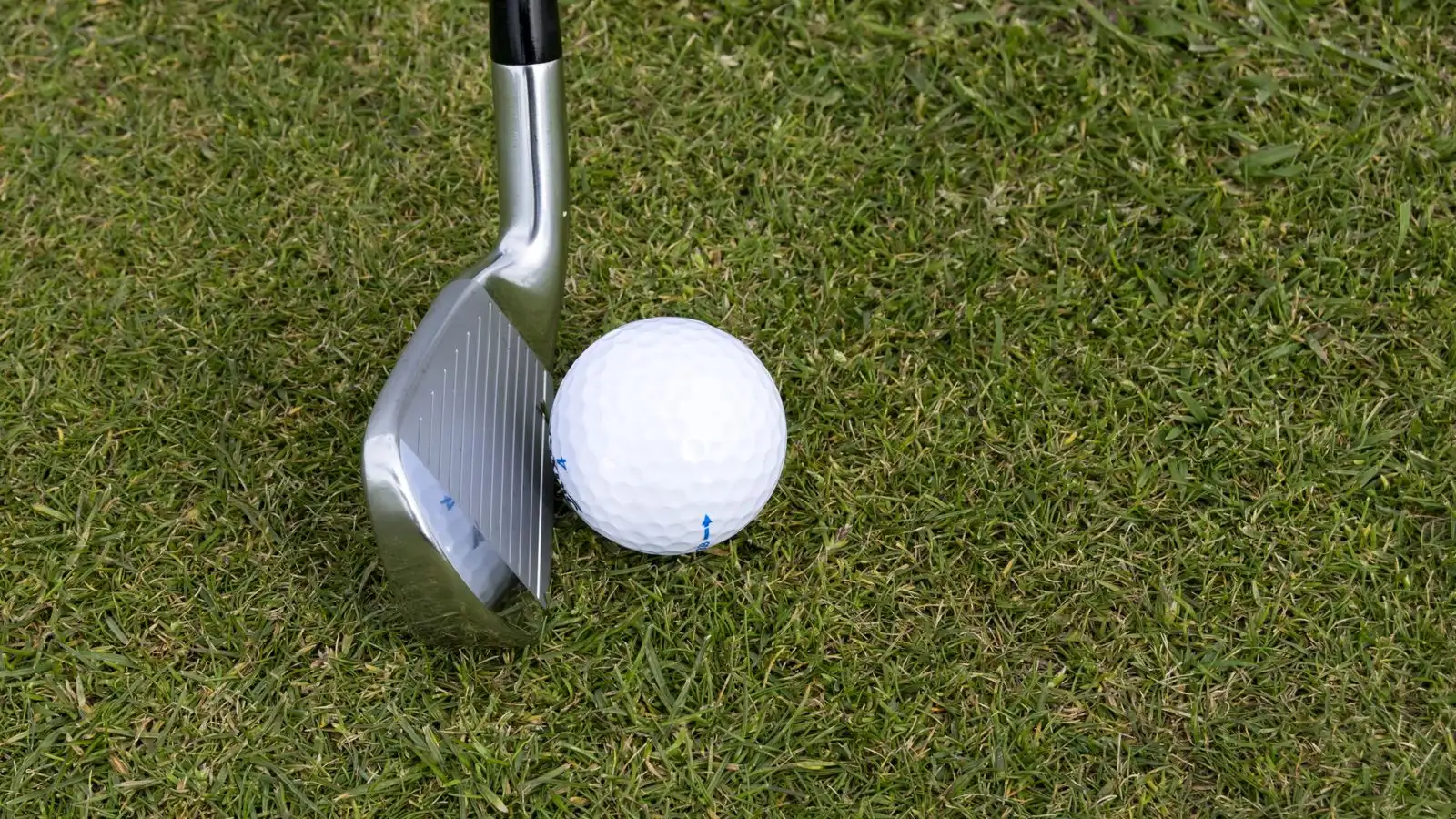
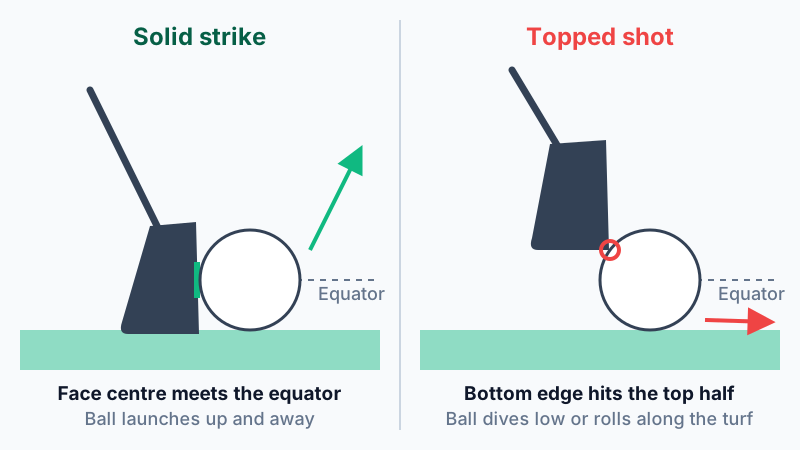
You top the ball when the bottom edge of the club meets the top half of the ball. The shot comes out low and diving, and sometimes it just rolls along the turf. It's embarrassing, but it's fixable.
Many golfers think the cause is "looking up" or "lifting your head". It's the first thing a playing partner will tell you. So you bury your chin in your chest, stare at the ball like you're trying to hypnotise it, and top it again anyway.
The myth sticks because it feels true. When you topped the ball, your head moved. But your head moved because your body moved, and your body moved because of swing faults that have nothing to do with your eyes.
What Causes a Topped Shot?
Three faults account for most topped shots. Working out which one applies to you is the first step towards fixing it.
Early Extension
Early extension (your hips thrusting towards the ball during the downswing) is the most common cause. As your hips push forward, your spine straightens and your chest lifts. The club comes up with it.
At address, your eyes and shoulders are a set distance from the ball. If your spine straightens during the downswing, the whole arc rises. Even a small change can lift the leading edge above the ball's equator, and that's a top.
TPI's screening data found early extension in 67% of the more than 90,000 golfers it has tested, while 99% of the 100-plus tour players it tested don't have it. That makes it the first place I'd look.
Poor Weight Transfer
Your weight should move to your lead foot during the downswing. If it stays on your trail foot (or shifts backwards), the low point (the bottom of the club's arc) moves behind the ball. The club hits the ground first, bounces up and catches the top of the ball.
This is sometimes called "hanging back" or "falling away". You'll see it in golfers who lean away from the target at impact.
Loss of Posture
Some golfers get their weight forward but still lose their spine angle (the forward tilt of your torso at address). They stand up through impact, the arms pull in to compensate, and the club rises. You get the same thin or topped contact.
| Common Myth | Actual Cause | The Real Fix | |-------------|-------------|--------------| | "I lifted my head" | Early extension (hips thrusting forward) | Maintain spine angle through impact | | "I swung too hard" | Deceleration or loss of posture | Commit to the shot and rotate through | | "I need to hit down on it" | Weight stuck on trail foot | Shift weight to lead side before impact | | "It's random and unfixable" | Inconsistent low point | Drill low point control daily |
Ready to ingrain this fix? Log your drill sessions in the free Green Streak app and see your scores build day by day.
How to Diagnose Your Topped Shots
Before you pick a drill, work out which cause is behind your tops. You can do this at the range, or at home with a phone camera.
The Phone Video Test
Set your phone on the ground behind you, looking down the target line. Record a few swings in slow motion and watch for these clues:
- Hips pushing towards the ball at impact: early extension
- Weight staying on your back foot at impact: poor weight transfer
- Chest lifting before the club reaches the ball: loss of posture
The Tee Peg Low Point Test
Push a tee into the ground 2 inches in front of your ball, towards the target. Hit a normal shot. Did you clip the tee after the ball? If not, your low point is too far back, which points to weight transfer.
The Trouser Crease Check
This is a quick visual check. At address, look at the crease where your trail leg meets your hip. If that crease disappears during the downswing (your hip thrusts forward and your leg straightens), you're early extending.
5 Drills to Stop Topping the Ball
These drills go after the three root causes. I've listed them in order of importance. Start with the first two and add the rest as you progress.
Drill 1 - The Wall Drill for Spine Angle
Targets: Early extension, loss of posture
Setup: Take your golf posture with your forehead resting lightly against a wall. No club needed. Cross your arms over your chest.
Execution:
- Take your golf posture with your forehead against the wall
- Make a slow backswing rotation, keeping forehead contact
- Rotate through a downswing motion to a full finish
- Your forehead should never leave the wall
What to feel: Light, steady contact with the wall through the whole movement. If your head pulls away from the wall during the downswing, you're early extending.
Reps: 20 slow reps, ideally twice a day. Count how many keep forehead contact. It's my favourite at-home drill for topping.
Drill 2 - The Divot Ahead Drill
Targets: Low point control, weight transfer
Setup: At the range, or in your garden if you can take a divot. Push a tee peg into the ground 2 inches ahead of your ball, towards the target.
Execution:
- Address the ball normally with a short iron
- Shift your focus from the ball to the tee peg in front of it
- Swing and try to clip the tee out of the ground after you hit the ball
- Don't worry about where the ball goes
What to feel: Your weight arriving on your lead foot before the club reaches the ball, with the divot starting in front of the ball rather than behind it.
Reps: 20 balls per session. Count how many times you clip the tee.
Drill 3 - The Towel Connection Drill
Targets: Arm-body connection, consistent arc
Setup: Lay a hand towel across your chest, tucked under both armpits. Use a wedge or 9-iron.
Execution:
- Take your normal stance with the towel pinned under both arms
- Make smooth half-swings (waist to waist)
- Focus on rotating your body through the shot
- If the towel drops, your arms have disconnected from your body
What to feel: Your arms and torso moving together. The club stays on a consistent arc because your body controls it, rather than your hands flipping.
Reps: 15-20 half-swings. Progress to three-quarter swings once the towel stays pinned.
Making progress? Log each practice session in the free Green Streak app and build a streak that keeps you at it.
Drill 4 - The Step-Through Drill
Targets: Weight transfer, sequencing
Setup: Range or garden. Use a 7-iron and a ball on a tee.
Execution:
- Take your normal stance but bring your feet together
- Start your backswing and step your lead foot towards the target as you swing down
- Let your trail foot follow naturally
- You'll finish with your weight fully on your lead foot, facing the target
What to feel: A weight shift like a baseball swing. It's very hard to hang back when you're stepping through.
Reps: 15 balls per session. The drill feels strange at first, but it usually settles down after a few swings.
The 19th Hole: I see the same pattern again and again on r/golf and golf forums. Someone posts a swing video asking why they top everything, and the most useful replies aren't about drills. They're about setup. Standing too far from the ball makes you reach with your arms, then straighten your spine to get the club back to it. Moving a little closer at address is often the fix people didn't expect. Before you grind through drills, film your address position. The answer might be simpler than you think.
Drill 5 - The Pump Drill for Posture Check
Targets: Downswing posture, impact position awareness
Setup: Range or garden. Any iron, with the ball on a tee.
Execution:
- Take your backswing to the top
- Pump the club down to hip height, then pause and check your posture
- Your spine angle should match your address position
- Pump back up, then swing through and hit the ball on the second pump
What to feel: Your posture staying the same between address and the pump checkpoint. If you feel your chest lifting during the pump, that's the fault.
Reps: 10 pump-and-hit swings. It's slower than the others, but it teaches you where your body is in the downswing.
Your Weekly Practice Plan
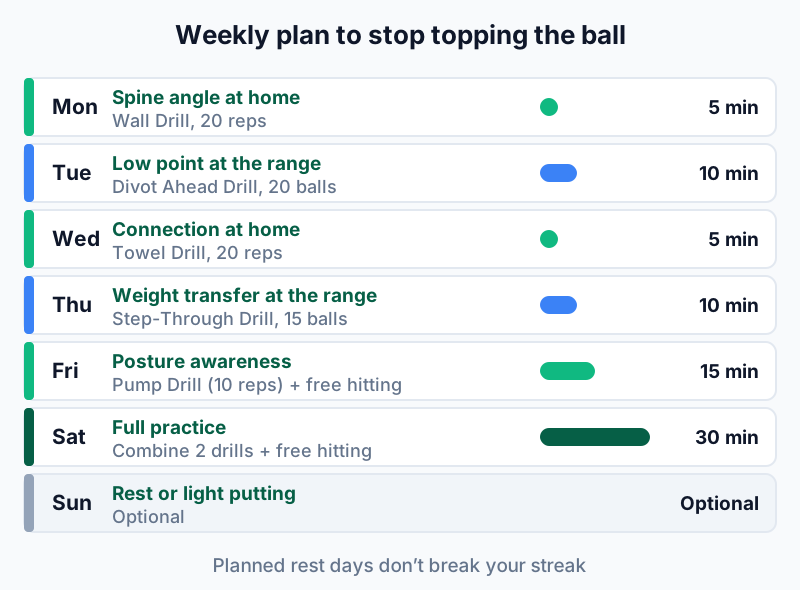
Fixing a topped shot takes regular, structured repetition rather than one marathon session. Here's a plan that fits into about 15 minutes a day, using the Seinfeld Strategy of daily consistency.
| Day | Focus | Drill | Duration | |-----|-------|-------|----------| | Monday | Spine angle at home | Wall Drill (20 reps) | 5 min | | Tuesday | Low point at the range | Divot Ahead Drill (20 balls) | 10 min | | Wednesday | Connection at home | Towel Drill (20 reps) | 5 min | | Thursday | Weight transfer at the range | Step-Through Drill (15 balls) | 10 min | | Friday | Posture awareness | Pump Drill (10 reps) + free hitting | 15 min | | Saturday | Full practice | Combine 2 drills + free hitting | 30 min | | Sunday | Rest or light putting | Optional | Optional |
Try to do something on most days. Even 5 minutes of the Wall Drill at home keeps the pattern fresh. Log each session in Green Streak, and Sunday can be a planned rest day that doesn't break your streak.
5 Mistakes Golfers Make When Fixing a Top
Burying Your Chin
This is the classic over-correction. You've been told to "keep your head down", so you lock your chin against your chest. That restricts your shoulder turn, blocks your rotation and often makes the top worse.
Trying to Scoop the Ball Into the Air
After a few tops in a row, it's tempting to help the ball up. You flip your wrists under the ball to lift it. That moves the low point backwards and makes thin contact more likely.
Changing Everything at Once
You read this article, watch three YouTube videos and try to fix your weight transfer, grip, spine angle and takeaway in one range session. Pick one drill and stick with it for a week. Then add the next.
Swinging Slower to "Be Safe"
Decelerating through impact produces plenty of tops. If you slow down to avoid the top, you can make one more likely. Commit to the swing and trust the positions the drills teach you at full speed.
Skipping the Diagnosis
Jumping straight to drills without filming your swing is guesswork. Five minutes with a phone camera usually shows which of the three causes is your problem. Fix the right thing first.
| Mistake | Why It Happens | What to Do Instead | |---------|---------------|-------------------| | Burying chin in chest | Told to "keep your head down" | Keep eyes on the ball, but let your head rotate naturally | | Scooping the ball | Fear of another top | Trust the loft of the club to get the ball airborne | | Changing everything at once | Overwhelm from too much advice | One drill per week, track progress | | Swinging slower | Fear-based deceleration | Commit to full speed, trust the drill pattern | | Skipping diagnosis | Impatience | Film 3 swings in slow motion before picking a drill |
When to Get a Lesson
These drills deal with the usual causes of topped shots. Some situations still call for a PGA professional.
Book a lesson if:
- You've drilled regularly for 3-4 weeks and see no improvement
- You're topping only one club (driver but not irons, or the other way round). That suggests a setup or equipment issue a pro can spot faster than you can
- The tops come in clusters on the course but never at the range. That points to tension or nerves, which a pro can help you work through
- You have physical limitations (back pain, hip restrictions) that might need a swing change rather than a drill
A good warm-up routine before practice and rounds can help too. Cold muscles and stiff hips can make it harder to hold your posture.
If you're also battling a slice, I'd sort out the topping first. Once your contact is solid, it's much easier to read what your ball flight is telling you.
Sources & Further Reading
- PGA of America Teaching Resources: professional instruction methodology and swing fault research
- GOLFTEC: Why You Top the Ball on Your Golf Swing: breakdown of common causes and fixes
- TPI (Titleist Performance Institute): body-swing connection research
- TPI: Early Extension Swing Characteristic: screening data on how common early extension is among amateurs and tour players
- Golf Monthly Instruction: technique guides and drill libraries
Related Articles
- The Seinfeld Strategy: Why "Don't Break the Chain" Works for Golf Practice
- Fix Your Golf Slice: The Drill That Actually Works
- Best Golf Nets for Garage Practice
- How to Break 100 in Golf: A Step-by-Step Guide
- The 5-Minute Golf Warm-Up Routine That Actually Works
Frequently Asked Questions
Why do I top the golf ball with my driver but not my irons?
Driver tops often start at setup. The ball is teed high and forward in your stance, so weight transfer matters even more. If your weight stays on your trail foot, the arc bottoms out too far behind the ball. The club is rising too steeply by the time it arrives and catches the top. Try the Step-Through Drill with your driver.
Is topping the ball caused by lifting my head?
Rarely. "Keep your head down" is one of golf's most persistent myths. Topping usually comes from early extension, poor weight transfer or loss of posture. Your head might move as a symptom, but locking it in place won't fix the cause. Film your swing from behind to see what's happening.
How long does it take to fix topped shots?
It varies from golfer to golfer. Short, regular sessions tend to work better than one long session a week, and 5 minutes of the Wall Drill a day is a good place to start. If you've done the drills for 3-4 weeks with no change, book a lesson.
Can I fix topping at home without going to the range?
Yes, for a lot of the work. The Wall Drill needs no club at all. The Towel Drill and Pump Drill can be done as rehearsal swings without a ball, if you have room to swing a club safely. A garage practice net lets you add real shots.
What is low point control in golf?
Low point is the lowest point of your club's swing arc. For solid iron contact, the low point needs to be slightly ahead of the ball (towards the target). If it's behind the ball, you'll hit the ground first (a fat shot) or catch the ball on the way up (a top). The Divot Ahead Drill trains this directly.
Do topped shots damage my golf club?
Occasional tops won't harm your clubs. Chronic topping can leave minor cosmetic marks on the top edge of your irons, but the real cost is to your scorecard. A topped mid-iron can leave you well short of where a good strike would have finished.
Should I use a different ball position to stop topping?
Ball position can contribute to topping, but moving the ball around without fixing the cause just creates new problems. Sort out your spine angle and weight transfer first. After that, ball position becomes minor fine-tuning rather than a sticking plaster.
Is there a quick fix I can use on the course mid-round?
If tops creep in on the course, try this at address: feel like you're sitting slightly more into your hips, with a little more knee flex. It helps you resist standing up through impact. It's not a permanent fix, but it can rescue the back nine while you work on the drills in practice.
Disclaimer: This article is for informational purposes only and does not replace professional golf instruction. Individual results will vary based on ability, practice consistency, and physical condition. Consult a PGA professional for personalised swing advice.
Ready to build your practice streak?
Track your sessions, set goals, and improve with Green Streak — completely free.
Get Started Free