Essential Golf Practice Equipment for Your Garden
Turn your garden into a year-round practice facility. Every piece of kit you need, from hitting nets to putting greens, ranked by budget and garden size.
Quick Summary
- Short, frequent garden sessions suit how people learn: distributed practice research shows that spacing practice out produces better performance than cramming it into one long session
- A garden setup costs anything from under £100 to £1,500: foam balls and a chipping target get you started tonight, while a net, mat and putting green make a proper practice area
- You need less space than you think: a 3m x 4m patch of lawn is enough for chipping, putting and alignment work, and full-swing nets fit in many medium-sized gardens
- Log every session: record your garden practice in the free Green Streak app and keep your streak going week after week
Your garden can be a golf practice area. You just haven't set it up yet. While you check the forecast and debate driving 25 minutes to the range, a perfectly good patch of grass sits ten steps from your back door.
Quick Answer: Start with three items: foam practice balls (£8-£15), a chipping target net (£25-£40) and alignment sticks (£10-£15). That under-£70 kit covers short game, alignment and swing path work in any garden. Then add a hitting mat (£50-£150), a full-swing net (£60-£700) and a putting mat (£30-£130) as budget allows. Buy kit that is quick to set up, because the easier it is to start, the more often you'll practise.
Table of Contents
- Why Your Garden Is the Best Practice Facility You'll Ever Own
- Garden Size Guide: What Fits Where
- Essential Equipment Category 1: Practice Nets
- Essential Equipment Category 2: Hitting Mats
- Essential Equipment Category 3: Chipping Targets
- Essential Equipment Category 4: Putting Greens and Mats
- Essential Equipment Category 5: Foam and Limited-Flight Balls
- Essential Equipment Category 6: Alignment Aids and Training Tools
- Quick-Pick Summary Table
- Budget Breakdown: What to Buy at Every Price Point
- What to Buy First vs What to Add Later
- Weather Protection and Storage
- Safety Considerations: Neighbours, Fences, and Windows
- Seasonal Use Tips for UK Gardens
- Sources & Further Reading
- Related Articles
- Frequently Asked Questions
Why Your Garden Is the Best Practice Facility You'll Ever Own
The maths is simple. A range session can take 90 minutes door to door: 25 minutes driving, 10 minutes setting up, 40 minutes hitting and 15 minutes getting home. A garden session takes 12 minutes for the same 40 balls, with no commute. Over a month, that could mean practising 15 times instead of 4.
A meta-analysis of 63 studies in the Journal of Applied Psychology found that people who spaced their practice out performed significantly better than those who crammed it into one block. Short, frequent sessions suit that pattern far better than marathon range visits. Your garden makes short and frequent the default.
There are three reasons UK golfers in particular should be thinking about garden practice:
- The weather window is unpredictable. British weather doesn't announce itself reliably. A garden setup lets you grab 10 minutes when the sun appears instead of booking a range slot two hours from now.
- Range costs add up. At £6-£8 per bucket, three sessions a week runs £75-£100 a month. A one-time equipment investment pays for itself within a season.
- Evenings are short half the year. In midwinter, it's dark by around 4pm. A garden session at lunch or straight after work keeps practice alive through winter.
The best garden setups are built gradually, often starting with nothing more than a wedge and some foam balls. A £12 start like that can mean more practice in the first month than several months of range trips, because there is nothing in the way. For a full breakdown of what you can practise without leaving your property, see the complete guide to practising golf at home.
Garden Size Guide: What Fits Where
Before you buy anything, measure your garden. Here is what fits in each size category.
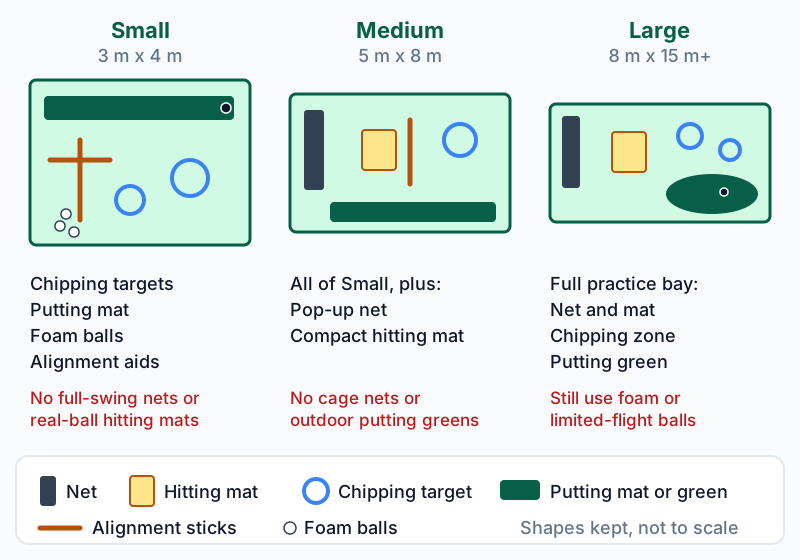
| Garden Size | Dimensions | What Fits | What Doesn't | |-------------|-----------|-----------|--------------| | Small | 3m x 4m | Chipping targets, putting mat, foam balls, alignment aids | Full-swing nets, hitting mats with real balls | | Medium | 5m x 8m | All of the above plus a pop-up net, compact hitting mat | Large cage-style nets, outdoor putting greens | | Large | 8m x 15m+ | Full practice bay with net, mat, chipping zone, and putting green | Driving range (still need foam or limited-flight balls) |
My take: many UK gardens fall into the small-to-medium category, and that is fine. Chipping and putting cover a big share of your shots: Dave Pelz found that 60-65% of all golf shots occur inside 100 yards of the hole. You don't need a massive garden to cut strokes. You need consistent access to a wedge and some targets.
Essential Equipment Category 1: Practice Nets
A good net turns your garden into a full-swing practice station. For detailed reviews and comparisons, see the dedicated best golf nets guide.
Spornia SPG-7: Best Overall Garden Net
The Spornia SPG-7 is my top net recommendation for most gardens. It is designed to pop up in under 30 seconds and fold flat for storage against a fence or shed wall, and owners report it absorbs full driver impacts without bounceback.
For garden use specifically, the SPG-7 has two advantages over garage nets: the roof attachment catches high wedge shots that would otherwise sail over the frame, and the ball return system means you're not hunting through flower beds after every swing.
Price: ~£320-£360
Pros:
- Zero bounceback with auto ball return
- 30-second pop-up setup, which makes quick garden sessions easy
- Roof attachment prevents wedge shots escaping
- Folds flat for shed or garage storage
Cons:
- Premium price for a practice net
- Pop-up mechanism can be stiff when new
- Netting shows wear after heavy high-speed use
- Not fully waterproof, so it needs covering or bringing indoors in heavy rain
Best For: Golfers with a medium-to-large garden who want a net that is quick enough to put up every day.
GoSports Golf Practice Hitting Net: Best Budget
If you're testing whether garden net practice is for you, the GoSports net is the sensible starting point. At around £55-£70, it won't sting if you decide nets aren't your thing.
The frame assembles in 5-10 minutes and stays up if you have the space. The netting is thinner than premium options, which means more bounceback risk at high swing speeds. Pair it with foam balls and the problem goes away.
Price: ~£55-£70
Pros:
- Low entry cost to test garden net practice
- Stable frame once assembled
- Wide enough to catch off-centre hits
- Lightweight and portable
Cons:
- Some bounceback at higher swing speeds with real balls
- Takes 5-10 minutes to assemble vs 30 seconds for pop-ups
- Netting durability is limited under heavy use
- No ball return
Best For: Budget-conscious golfers who want to try full-swing garden practice. Use with foam balls for safety and pair with a budget hitting mat.
Net Return Pro Series V2: Best Premium
The Net Return is for golfers who are building a permanent garden practice bay. Its patented design returns every ball to your feet through a curved netting system. The 250,000-shot guarantee means this net will outlast your interest in golf.
Price: ~£625-£830
Pros:
- 250,000-shot guarantee
- Patented ball return system
- Professional-grade build quality
- Works with real balls at full speed without bounceback
Cons:
- Significant investment
- Heavy, and not designed for daily setup and teardown
- Requires a semi-permanent garden location
- Needs weather protection or a sheltered spot
Best For: Dedicated golfers building a permanent outdoor practice station with a covered or sheltered area in the garden.
Essential Equipment Category 2: Hitting Mats
Hitting off your lawn will cut it up quickly. A hitting mat protects the grass and gives you a consistent lie for every shot. For the full breakdown, see the best golf hitting mats guide.
Fiberbuilt Flight Deck: Best Overall
The Fiberbuilt uses a unique grass-turf hybrid surface that lets the club interact with the mat similarly to real turf. The fibres bend on impact rather than snagging the club, which means less wrist strain and more realistic feedback.
Price: ~£180-£220
Pros:
- Realistic turf interaction, with fibres that bend like grass
- Significantly reduces wrist and elbow strain vs cheap mats
- Durable construction for daily outdoor use
- Accepts standard rubber tees
Cons:
- Premium price for a hitting mat
- Compact size means limited stance room
- Needs a level surface to perform best
- Single-piece design makes storage slightly awkward
Best For: Golfers who hit more than 50 balls a session and want to protect their joints while getting realistic turf feedback.
GoSports Golf Hitting Mat: Best Budget
At around £35-£50, the GoSports mat is a solid garden workhorse. The turf is denser than ultra-cheap Amazon mats but not as forgiving as the Fiberbuilt. For 20-30 balls a few times a week, it does the job.
Price: ~£35-£50
Pros:
- Affordable and widely available
- Thick rubber base prevents sliding on grass
- Includes rubber tees
- Handles irons and wedges well
Cons:
- Can cause wrist discomfort during long sessions
- Turf grabs the club slightly, so fat shots feel worse than on real grass
- Surface wears unevenly over time
- Not ideal for driver practice
Best For: Golfers on a budget who want a reliable surface for iron and wedge practice in the garden.
Essential Equipment Category 3: Chipping Targets
Chipping targets give your short game practice a purpose. Without a target, you're moving foam balls around the garden. With one, you're training accuracy, trajectory and distance feel. For technique guidance, see the golf chipping tips guide.
Callaway Tri-Ball Hitting Net: Best Chipping Target
Three target areas at different heights give you instant feedback on trajectory and accuracy. Chip low into the bottom pocket, medium into the middle, or high into the top. Alternate between them to train adaptability.
Price: ~£25-£35
Pros:
- Three target zones for varied practice
- Pops up in seconds
- Lightweight and easy to store
- Durable enough for foam and real ball use
Cons:
- Tips over in strong wind without pegging down
- Small target area requires reasonably accurate chips to score
- Doesn't simulate green-side conditions
- Frame can bend if hit hard with real balls repeatedly
Best For: Every golfer with a garden. For the money, I think it is the best-value piece of garden practice kit.
JEF World of Golf Collapsible Chipping Net: Budget Option
A simpler design with a single target pocket. Less versatile than the Callaway but half the price.
Price: ~£12-£18
Pros:
- Extremely affordable
- Collapses flat for storage
- Light enough for any garden size
Cons:
- Single target limits drill variety
- Feels flimsy in wind
- Netting wears with heavy use
Best For: Golfers who want a cheap target to chip at while deciding whether to invest in something better.
Essential Equipment Category 4: Putting Greens and Mats
Putting practice at home is easy to fit into a day. You use your putter more than any other club in the bag, and a putting mat lets you work on it daily. For detailed mat reviews, see the best putting mats guide.
Perfect Practice Putting Mat: Best Garden Putting Mat
The Perfect Practice mat suits a patio or decking area adjacent to the garden. Its crystal velvet surface is rated to roll at roughly stimp 10, the built-in alignment guides train a consistent stroke, and the ball return keeps you putting without chasing balls across paving slabs.
Price: ~£105-£130
Pros:
- True-rolling surface at realistic green speed
- Built-in alignment guides and ball return
- Excellent for daily 10-minute putting sessions
- Rolls up for storage when not in use
Cons:
- Needs a flat, hard surface, because uneven grass won't work
- Not waterproof, so bring it indoors after use
- 9.5 feet (2.9 m) long, so it needs patio or deck space
- Surface can mark if left in direct sun for extended periods
Best For: Golfers with a patio, deck, or flat garden surface who want a realistic putting experience outdoors.
PUTT-A-BOUT Grassroots Par Three: Best Budget
At roughly £30-£40, this is the entry point for garden putting. Three holes at different distances and angles give you enough variety for daily drills. Owners report the surface is consistent enough to build a repeatable stroke.
Price: ~£30-£40
Pros:
- Three target holes for varied practice
- Affordable entry point
- Rolls up for easy storage
- Consistent surface for the price
Cons:
- Edges curl after repeated rolling
- No alignment aids
- No ball return
- Not designed for outdoor weather exposure
Best For: Budget-conscious golfers who want to start putting in the garden tonight.
Essential Equipment Category 5: Foam and Limited-Flight Balls
Foam balls are the basis of safe garden practice. They remove most of the worry about windows, neighbours and property damage in one purchase.
Callaway HX Practice Balls: Best Foam Ball
The Callaway HX balls have a perforated design that limits flight to roughly 40 yards maximum, and owners report a surprisingly realistic feel off the clubface. You get real feedback on strike quality without the risk of sending a ball through next door's conservatory.
Price: ~£15-£20 for a pack of 18
Pros:
- Realistic feel off the clubface
- Maximum flight of roughly 40 yards
- Durable enough for hundreds of strikes
- Visible colours make retrieval easy
Cons:
- Wind affects flight path more than real balls
- No use for distance control beyond 40 yards
- Slightly louder on impact than softer foam balls
- Need replacing after heavy long-term use
Best For: Every golfer practising in a garden. These are non-negotiable in any garden setup.
PGA Tour Foam Practice Balls: Budget Foam Option
Ultra-soft foam balls that travel no more than 15-20 yards. They are safe for small gardens and indoor use. The feel is less realistic than the Callaway HX, but the risk of damage is very low.
Price: ~£8-£12 for a pack of 12
Pros:
- Very low damage risk, even in the smallest gardens
- Very quiet on impact
- Cheap to buy in bulk
Cons:
- Less realistic feel than perforated balls
- Very limited flight makes full-swing feedback unreliable
- Wear out faster than perforated options
- Affected heavily by any wind
Best For: Small-garden golfers and anyone with particularly close neighbours or fragile surroundings.
Essential Equipment Category 6: Alignment Aids and Training Tools
Alignment aids cost almost nothing and improve almost everything. They're the most underrated piece of garden practice equipment.
Tour Sticks Alignment Rods: Best Alignment Aid
Two fibreglass rods that you lay on the ground to check alignment, swing path and ball position. You will see them on any tour practice ground, and they are just as useful for amateurs.
Price: ~£10-£15
Pros:
- Immediate visual feedback on alignment
- Dozens of drill applications
- Virtually indestructible
- Lightweight and easy to store
Cons:
- Require knowledge of how to use them effectively
- Can roll away on sloped gardens
- Bright colours may annoy tidy garden enthusiasts
Best For: Every golfer at every level. If you buy one piece of equipment from this list, buy alignment sticks. For structured drills to use with them, see the best golf training aids guide.
SKLZ Gold Flex Tempo Trainer: Best Swing Trainer for the Garden
A weighted, flexible shaft that trains tempo and transition. Swing it in the garden for 20 reps before a round or as a daily warm-up. The flex forces you to feel the correct sequencing from backswing to downswing.
Price: ~£50-£60
Pros:
- Trains tempo and transition feel
- No ball needed, so it is pure swing repetition
- Doubles as a stretching and warm-up tool
- Compact enough for any garden size
Cons:
- Takes time to understand the feedback it gives
- Not a substitute for hitting actual balls
- Can feel awkward for beginners initially
Best For: Golfers working on tempo and transition who want a tool they can use in 2 minutes with zero setup.
Quick-Pick Summary Table
| Category | Best Overall | Price | Best Budget | Price | |----------|-------------|-------|-------------|-------| | Practice Net | Spornia SPG-7 | ~£340 | GoSports Hitting Net | ~£60 | | Hitting Mat | Fiberbuilt Flight Deck | ~£200 | GoSports Hitting Mat | ~£40 | | Chipping Target | Callaway Tri-Ball Net | ~£30 | JEF Collapsible Net | ~£15 | | Putting Mat | Perfect Practice Mat | ~£120 | PUTT-A-BOUT Par Three | ~£35 | | Foam Balls | Callaway HX Practice | ~£18 | PGA Tour Foam Balls | ~£10 | | Alignment Aid | Tour Sticks | ~£12 | DIY dowels from B&Q | ~£3 | | Swing Trainer | SKLZ Gold Flex | ~£55 | Orange Whip Compact | ~£100 |
Swing trainers are the one exception to the budget column: the Orange Whip Compact costs more than the SKLZ and is listed as the step-up option.
Budget Breakdown: What to Buy at Every Price Point
Under £100: The Starter Kit
This is where everyone should begin. You can practise chipping, putting, and alignment work with this setup.
| Item | Approximate Cost | |------|-----------------| | Foam practice balls (Callaway HX 18-pack) | £18 | | Chipping target (Callaway Tri-Ball) | £30 | | Alignment sticks | £12 | | Budget putting mat (PUTT-A-BOUT) | £35 | | Total | £95 |
This kit works in any garden size, from a 3m courtyard to a large lawn. You're covering short game and alignment, two areas where practice shows up quickly on the scorecard.
Under £300: The Serious Practiser
Add a hitting mat and a pop-up net for full-swing work.
| Item | Approximate Cost | |------|-----------------| | Everything in the Starter Kit | £95 | | Budget hitting mat (GoSports) | £40 | | Budget practice net (GoSports) | £60 | | SKLZ Gold Flex tempo trainer | £55 | | Total | £250 |
Now you have a complete practice facility. Short game, full swing, tempo work, and putting. This setup fits comfortably in a medium-sized garden.
Under £650: The Committed Setup
Upgrade the key components for better feel, durability, and fewer compromises.
| Item | Approximate Cost | |------|-----------------| | Spornia SPG-7 net | £340 | | Fiberbuilt Flight Deck mat | £200 | | Callaway Tri-Ball chipping target | £30 | | Alignment sticks | £12 | | Callaway HX foam balls (x2 packs) | £36 | | Total | £618 |
This is the sweet spot. Premium net, premium mat, and the essentials. Add a putting mat from the starter kit if budget stretches to £655.
The Dream Setup: £1,000-£1,500
Everything you need for a permanent garden practice bay.
| Item | Approximate Cost | |------|-----------------| | Net Return Pro Series V2 | £700 | | Fiberbuilt Flight Deck mat | £200 | | Perfect Practice Putting Mat | £120 | | Callaway Tri-Ball chipping target | £30 | | Callaway HX foam balls (x3 packs) | £54 | | Alignment sticks | £12 | | SKLZ Gold Flex | £55 | | Weatherproof storage box | £50 | | Rubber base tiles for mat area | £60 | | Total | ~£1,280 |
Add a budget launch monitor (£200-£400) to the net setup and you have a very capable home practice bay.
What to Buy First vs What to Add Later
Buy first (Month 1):
- Foam balls: low risk, immediate practice
- Chipping target: gives every session a purpose
- Alignment sticks: check your aim and setup every time
Add second (Month 2-3): 4. Putting mat: daily putting becomes easy 5. Hitting mat: protects your lawn and gives you a consistent lie
Add third (Month 4-6): 6. Practice net: full-swing work with real feedback 7. Swing trainer: tempo work between hitting sessions
Add last (When budget allows): 8. Premium net upgrade: durability and convenience 9. Premium mat upgrade: joint protection and realistic turf 10. Launch monitor: data for your practice
This order is deliberate. Start with the equipment that builds the habit, then buy the equipment that makes the habit better. Too many golfers buy a £400 net first, use it three times, and then it becomes an expensive washing-line support.
The 19th Hole: It is a familiar story in the home-practice threads on r/golf and GolfWRX. A golfer's first garden purchase is a mid-range net found on sale for £180. It gets used keenly for a fortnight, then gathers bird droppings for six months. The net isn't the problem; the habit was never built. If that sounds familiar, start again with a £12 chipping target and some foam balls. Ten minutes of chipping while the kettle boils is easy to repeat, and a streak soon feels worth protecting. Once it does, put the net back up. That is why I built the Green Streak app: consistency first, equipment second.
Weather Protection and Storage
UK weather will destroy unprotected equipment. Here is how to protect your investment.
Nets: Pop-up nets like the Spornia fold flat in 30 seconds. Store them in a shed or garage between sessions. Permanent nets like the Net Return need a waterproof cover (roughly £20-£30) or a sheltered garden position. Leaving netting exposed to sustained rain weakens the fibres and accelerates wear.
Hitting mats: Rubber-backed mats handle brief rain exposure but should not be left face-down on wet grass permanently. Stand them upright against a wall to dry. Prolonged moisture underneath creates mould on both the mat and your lawn.
Putting mats: Never leave these outside. The surface materials absorb water, warp, and lose their rolling consistency. Treat your putting mat like an indoor item that visits the garden.
Foam balls: Rain does them no harm, so a bucket by the back door is fine. Strong sun will fade and harden them over time, so keep them in the shade.
Storage solution: A weatherproof garden storage box (£40-£60 from B&Q, Argos, or Amazon) keeps everything organised and dry. Dedicate one box to golf gear. Alignment sticks, foam balls, chipping targets, and swing trainers all fit inside. The faster you can grab equipment, the more often you'll practise.
Safety Considerations: Neighbours, Fences, and Windows
This section is not optional. A mis-hit real golf ball travelling at 120 mph will go through a window, dent a car, or injure someone. Take safety seriously.
Rule 1: Use foam balls unless you have a reliable net and adequate space. Foam balls remove almost all safety concerns. The Callaway HX tops out at about 40 yards and is unlikely to damage anything it hits. If your garden borders another property within 30 metres, foam balls should be your default.
Rule 2: Position your net with a backstop. Set up your net so that a ball passing through or over it hits a fence, wall or hedge rather than a neighbour's garden. Assume that at some point a ball will escape the net. Where does it go? If the answer is "through next door's kitchen window," move the net.
Rule 3: Check the net before every session. Inspect for holes, weak seams, and frame integrity. Netting degrades. A net that caught 10,000 balls safely might let ball 10,001 through. This takes 10 seconds and could save you a very awkward conversation.
Rule 4: Never hit toward the house. This sounds obvious. It needs saying. Position your hitting area so that you're facing away from your home and any neighbouring buildings. A shanked iron can travel at an alarming angle.
Rule 5: Communicate with neighbours. If you're setting up a permanent practice area, mention it. Many neighbours are fine with it. Some might have concerns about noise or stray balls. A brief conversation prevents disputes.
Rule 6: Be mindful of children and pets. If children or pets use the garden, never leave equipment set up unsupervised with real balls. Foam balls are safe. Real balls in a bucket next to a net are a temptation.
Seasonal Use Tips for UK Gardens
Your garden practice setup should adapt to British seasons, not disappear for half the year.
Spring (March-May)
The golden window. Longest daylight hours are approaching, temperatures are reasonable, and the ground is firming up. This is the time to establish your daily practice habit. Set up the full kit and commit to a streak. Log every session in Green Streak and aim for 30 consecutive days.
Summer (June-August)
Peak practice season. Evenings stretch past 9pm. Move your putting mat outside for combined chipping-and-putting sessions. This is the time to add any new equipment, so you get plenty of use before autumn.
Autumn (September-November)
Daylight shrinks. Switch to shorter, focused sessions. Chipping and alignment work in the last hour of light. Move putting practice indoors. Foam balls work in low light better than you'd expect, because the bright colours are easy to spot.
Winter (December-February)
The test of commitment. Garden practice is still possible on dry days. Focus on:
- Swing trainer reps (SKLZ Gold Flex, 5 minutes, no ball needed)
- Alignment work with sticks (checking setup positions)
- Foam ball chipping to a target (works on cold, dry days)
- Indoor putting on your mat
Waterproof gloves (£15-£20) make winter grip bearable. A hot drink waiting inside makes it tolerable. Even 5 minutes of winter garden practice keeps your swing ticking over while many golfers stop altogether.
The golfers who practise through winter are the ones who start spring with a head start. Everyone else spends April "finding their swing again."
Sources & Further Reading
- Donovan, J.J. & Radosevich, D.J. (1999). "A Meta-Analytic Review of the Distribution of Practice Effect: Now You See It, Now You Don't." Journal of Applied Psychology, 84(5), 795-805. Link
- Pelz, D. (1999). Dave Pelz's Short Game Bible, sample text, Library of Congress. Link
- PGA of America: instruction and coaching resources. Link
- R&A: Rules of Golf and equipment standards. Link
- GolfWRX Forums: community equipment reviews and garden setup threads. Link
- r/golf: Reddit community discussions on home and garden practice setups. Link
Related Articles
- Best Golf Nets for Garage Practice
- The Complete Guide to Practicing Golf at Home
- Best Golf Hitting Mats
- Best Putting Mats for Home Practice
- Best Golf Training Aids
- Golf Chipping Tips: Lower Your Scores Around the Green
Frequently Asked Questions
What is the best single piece of garden golf practice equipment to buy first?
A chipping target net, specifically the Callaway Tri-Ball (roughly £30). Paired with a pack of foam balls (£10-£18), it gives you purposeful short game practice in any garden size with zero setup friction. A target turns aimless chipping into focused practice you can measure. Alignment sticks (£12) are a close second, because they help you check your address position and cost almost nothing.
How much garden space do I need for full-swing practice with a net?
You need about 3 metres (10 feet) of depth for your stance and swing, plus the width of your net and 1 metre either side. In practical terms, a medium garden of roughly 5m x 8m comfortably fits a pop-up net like the Spornia SPG-7 with a hitting mat in front. If you practise under any overhead structure, such as a pergola, you need at least 3 metres (10 feet) of height to swing freely. If your garden is smaller, stick to foam ball chipping and putting, which account for plenty of your shots anyway.
Will hitting golf balls in my garden damage the lawn?
Yes, if you hit off the grass directly. Even a few sessions of iron practice will create divots, bare patches, and uneven ground. A hitting mat (from £35 for a budget option to £200 for a premium Fiberbuilt) protects your lawn completely. Place rubber base tiles or a plywood sheet under the mat for extra stability and turf protection. Chipping foam balls barely marks the grass, so your lawn can handle that without any protection.
Is it safe to use real golf balls in a garden net?
It can be, but only if your net is in good condition, properly positioned, and you have adequate backstop space behind it. Always inspect the net for holes or weak points before every session. Position the net so any escaped ball hits a solid fence or wall, not open space or a neighbour's property. For most UK suburban gardens, foam or limited-flight balls are the safer and more sensible choice. Reserve real balls for gardens with significant space behind the net and no adjacent properties within 30 metres.
How do I stop garden practice equipment from getting ruined by rain?
Follow three rules: store pop-up nets and hitting mats in a shed or garage after every session, never leave putting mats outdoors overnight, and invest in a weatherproof garden storage box (£40-£60) for smaller items like foam balls, alignment sticks, and chipping targets. For permanent nets like the Net Return Pro V2, buy a waterproof cover (£20-£30). Standing hitting mats upright against a wall after use prevents moisture being trapped underneath. Foam balls are the one exception, as rain does them no harm.
Can I practise golf in my garden during winter in the UK?
Yes. Winter garden practice works well on dry days. Focus on swing trainer reps (no ball needed), alignment stick drills, and foam ball chipping. These activities work fine in cold temperatures as long as the ground isn't frozen or waterlogged. Wear waterproof golf gloves for grip comfort, and limit sessions to 10-15 minutes to avoid cold-related muscle stiffness. Move putting practice indoors to a putting mat. Even a little winter practice helps you avoid the spring "rebuilding" phase that many club golfers go through.
Disclaimer: This article contains product recommendations based on published specifications, independent reviews and owner feedback. Green Streak may earn a small commission from qualifying purchases made through affiliate links, at no additional cost to you. All recommendations are genuine — I only suggest products I would use myself or recommend to a friend. Prices quoted are approximate and may vary by retailer and date. Always verify current pricing before purchasing. This article is for informational purposes and does not constitute professional coaching advice.
Ready to build your practice streak?
Track your sessions, set goals, and improve with Green Streak — completely free.
Get Started Free