How to Break 90 in Golf: A Step-by-Step Practice Plan
Only about 26% of golfers regularly break 90. This 10-week practice plan targets the short game and course management that separate 95s from 80s.

Quick Summary
- Only about 26% of golfers regularly break 90: that's the National Golf Foundation figure. Many of the shots separating a 95 from an 89 come inside 100 yards
- Golfers who shoot in the 80s average about 5 greens in regulation per round: that's from Shot Scope data, so bogey golf leaves plenty of room for missed greens
- 60% of your practice time should go on the short game: chipping, pitching and putting are where mid-handicappers can save shots fastest
- Track your progress: log your practice sessions in the free Green Streak app to build the consistency this plan needs
You shot 92 last weekend. Two weeks before that, 94, and before that, 97. You can feel it getting closer, but every time you get within touching distance, a blow-up hole on the back nine pushes you back over 90.
Quick Answer: To break 90 on a par-72 course, you need to score +17 or better, which is slightly better than a bogey per hole. Shot Scope data shows golfers who shoot in the 80s average 5.4 greens in regulation (on the green in par minus two strokes) and 1.5 three-putts per round. Golfers in the 90s average 3.6 and 2.3. So spend about 60% of your practice inside 100 yards and treat course management as a skill.
Table of Contents
- What Does Shooting 89 Actually Require
- Where Do Golfers Lose Strokes Between 90 and 100
- The Mental Shift From Power to Precision
- The 10-Week Break 90 Practice Plan
- Short Game Practice That Drops Strokes Fast
- Course Management Strategies for the Mid-Handicapper
- How Much Should I Practise to Break 90
- Common Mistakes That Keep Golfers Stuck at 90-95
- What Should My Practice Split Look Like
- Sources & Further Reading
- Related Articles
- Frequently Asked Questions
What Does Shooting 89 Actually Require
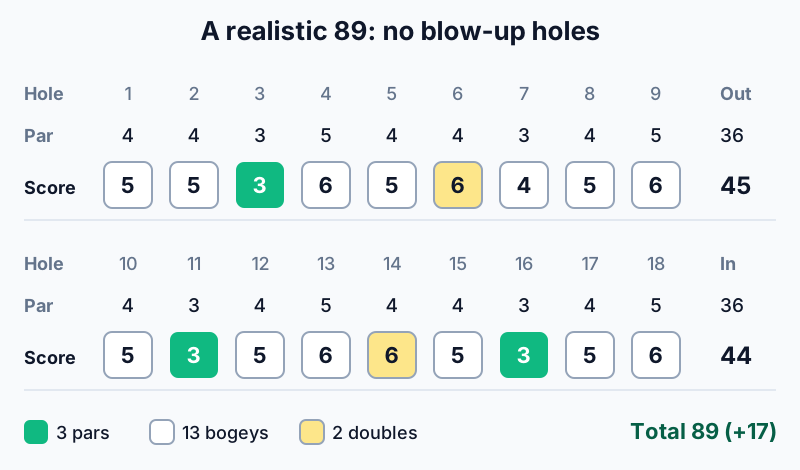
Breaking 90 means scoring +17 or better on a par-72 course. That's a lot of over-par holes, and that's the point. You don't need to play great golf to break 90. You need to play consistently decent golf and avoid disasters.
Here's what a realistic 89 looks like:
| Hole Result | Count | Strokes Over Par | Total | |-------------|-------|-------------------|-------| | Par | 3 | 0 | 0 | | Bogey | 13 | +1 each | +13 | | Double bogey | 2 | +2 each | +4 | | Triple bogey or worse | 0 | - | 0 | | Total | 18 | | +17 = 89 |
Three pars, thirteen bogeys and two doubles. No birdies and no heroic recoveries, just steady, unspectacular golf with no blow-up holes.
The numbers behind that scorecard tell you where to focus your practice:
| Stat (per round) | Golfers Shooting in the 90s | Golfers Shooting in the 80s | Gap to Close | |------|-------------------|-----------------|--------------| | Greens in regulation (GIR) | 3.6 | 5.4 | About +2 greens | | Multiple chips inside 50 yards | 3.2 | 2.1 | About -1 | | Three-putts | 2.3 | 1.5 | About -1 | | Missed putts inside 5 feet | 3.6 | 2.7 | About -1 | | Troublesome tee shots | 4.9 | 3.3 | About -1.5 |
Source: Shot Scope benchmarks for golfers scoring in the 90s and 80s.
That table is your roadmap. Tighten the short game, cut the three-putts and keep the ball out of trouble, and the 89 becomes realistic.
Where Do Golfers Lose Strokes Between 90 and 100
If you've already broken 100, you know how to keep the ball in play off the tee. That skill got you into the 90s. The jump from 95 to 89 mostly comes from somewhere else.
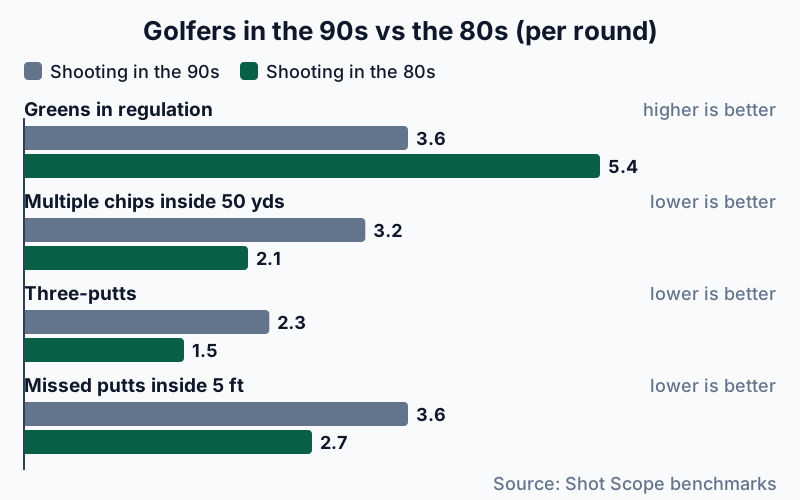
Shot Scope's benchmarks show where the gap between a 90s golfer and an 80s golfer sits. Per round, golfers who shoot in the 90s average:
- 3.2 multiple chips inside 50 yards, against 2.1 for golfers in the 80s
- 2.3 three-putts, against 1.5
- 3.6 missed putts inside 5 feet, against 2.7
- 4.9 troublesome tee shots, against 3.3
Now look at distance. The same data puts average driving distance at 225 yards for golfers in the 90s and 236 yards for golfers in the 80s, a gap of just 11 yards. Keeping the tee ball out of trouble matters, but extra distance isn't what separates the two groups. Yet plenty of mid-handicappers spend most of their practice time pounding drivers at the range, which the numbers don't support.
The golfer shooting 95 isn't losing to the golfer shooting 85 off the tee. They're losing in the 40-80 yard range, on the putting green and in the decisions they make between shots.
Extra driver speed might gain you 10 yards. Learning to chip the ball to 6 feet instead of 15 feet saves you shots, round after round.
Want to make this stick? Log your practice sessions in the free Green Streak app and build a daily habit that carries your practice onto the course.
The Mental Shift From Power to Precision
Breaking 100 is about avoiding disasters. Breaking 90 is about controlling outcomes.
The golfer stuck at 93-96 often has one main thought on every shot: hit it as far as possible. That mindset may have got them out of triple-bogey territory, but it won't get them to bogey golf.
The shift sounds simple but takes deliberate practice to make stick:
- Old mindset: "How far can I hit this?"
- New mindset: "Where is the safest place to put this ball?"
That one question changes your tee shots, your approaches and your recovery strategy. It takes the driver out of your hands on tight holes and aims you at the centre of the green instead of the flag. It also has you chipping out sideways from trouble instead of trying to thread a gap in the trees.
My own scores show how small the gap really is. In 2023 my average round was 94.8, and so far in 2026 it's 89.6. That's about five shots across 18 holes, with no new swing and no 30 extra yards off the tee. Five shots is a couple of doubles turned into bogeys and a few three-putts turned into two-putts. That's the scale of change breaking 90 asks for.
Distance is tempting, but control is what lowers your score.
The 10-Week Break 90 Practice Plan
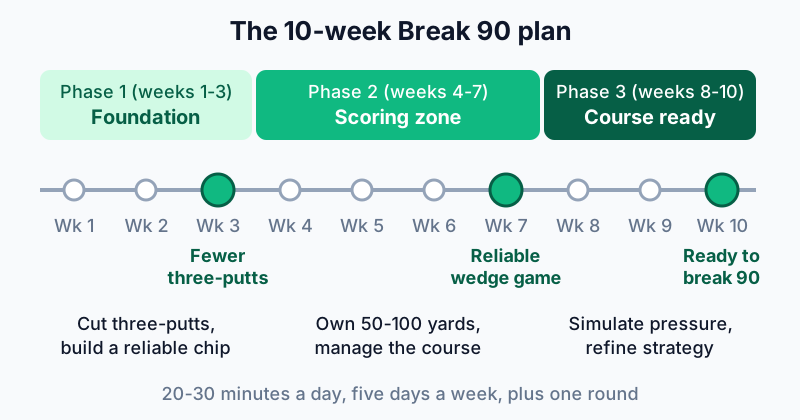
This plan assumes you can give it 20-30 minutes a day, five days a week, with one round at the weekend. That's roughly 2.5 hours of practice a week plus one round. If you already follow the Seinfeld Strategy, it slots straight into your existing streak.
The plan has three phases, and each builds on the last.
Phase 1 - Foundation (Weeks 1-3)
Goal: Cut out three-putts and build a reliable chip shot.
| Day | Focus | Duration | The Drill | |-----|-------|----------|-----------| | Monday | Lag putting | 20 min | Roll 20 putts from 25-40 feet. Success = every putt finishes within a 3-foot circle around the hole. | | Tuesday | Chipping | 20 min | Bump-and-run with 8-iron or 9-iron from 10-30 yards. Land it on the green and let it roll. 20 reps. | | Wednesday | 3-foot putts | 15 min | Make 20 in a row from 3 feet. If you miss, restart. This builds confidence in the "second putt." | | Thursday | Pitch shots | 20 min | Half-swing pitching wedge from 40-60 yards. Hit 15 balls. Focus on contact, not distance. | | Friday | Range session | 30 min | Hit 10 balls each with 7-iron, hybrid, and driver. Focus on tempo, not power. | | Weekend | Play 18 | - | Count GIR, putts, penalties, and up-and-downs on your scorecard. |
By week 3, you should start to see fewer three-putts and more chips finishing on the green.
Phase 2 - Scoring Zone (Weeks 4-7)
Goal: Build a reliable 50-100 yard game and improve course management.
| Day | Focus | Duration | The Drill | |-----|-------|----------|-----------| | Monday | 50-80 yard wedges | 25 min | Pick three targets. Hit 5 balls at each. Track how many finish within 20 feet. | | Tuesday | Up-and-down game | 20 min | Drop 10 balls around a practice green in different spots. Play each one to the hole. Count how many you get up and down in 2 shots. | | Wednesday | Lag putting | 20 min | Putt from 30-50 feet. Success = inside 3 feet. Track your percentage. | | Thursday | Approach shots | 25 min | Hit 7-iron, 8-iron, and 9-iron to specific targets. 10 balls each club. Record your average miss distance. | | Friday | Short game mix | 25 min | Alternate between chips, pitches, and bunker shots (if you have access). Random distances. | | Weekend | Play 18 | - | Pick one management goal per round: this week, aim at the centre of every green. |
Phase 3 - Course Ready (Weeks 8-10)
Goal: Simulate on-course pressure and refine your strategy.
| Day | Focus | Duration | The Drill | |-----|-------|----------|-----------| | Monday | Pressure putting | 20 min | 18-hole putting game: putt out from 18 varying distances. Par is 36 (two putts each). Beat par. | | Tuesday | On-course simulation | 25 min | At the range, play your home course mentally. Visualise each hole. Hit the club you'd actually hit. | | Wednesday | Scoring zone | 25 min | 30 shots from 40-100 yards. Track how many finish within 15 feet. Target: 40%. | | Thursday | 9-hole pressure round | 90 min | Play 9 holes with strict rules: no mulligans, no gimmes, honest scoring. | | Friday | Weakness session | 20 min | Practise whatever cost you the most strokes on Thursday. | | Weekend | Play 18 | - | Execute your strategy. No hero shots. Centre of every green. |
Short Game Practice That Drops Strokes Fast
Mid-handicappers lose a lot of shots from 100 yards and in. Shot Scope data shows scratch golfers get up and down from inside 50 yards 54% of the time, compared with 39% for 10-handicappers and 31% for 20-handicappers. Across a round full of missed greens, that gap adds up quickly.
The 3 Wedge Distances You Must Own
Forget about owning 12 different yardages with 4 wedges. Start with three distances and get to know them well:
- 40-50 yards: half-swing pitching wedge or gap wedge
- 60-70 yards: three-quarter-swing sand wedge
- 80-90 yards: full sand wedge or easy gap wedge
Pick a target in each range and hit balls until you know, without thinking, which swing produces which number. Write down the carry each swing gives you, because those numbers become your scoring zone reference card. Then score your final 10 balls at each distance, counting those that land within 10 yards of the target (out of 30).
The Up-and-Down Circuit
This drill copies what you face on the course. Drop 4 balls at each of these five positions around a practice green:
- Short-sided in the rough: ball 3 yards off the green, flag 10 feet away
- Long chip: ball 10 yards off the green, flag 30 feet away on the far side
- Bump-and-run: ball just off the fringe, flag 20 feet away with flat green between
- Downhill chip: ball above the green with a downslope
- Uphill pitch: ball 15 yards off with an uphill landing area
Play all 20 balls as you would on the course, chipping or pitching and then putting out. Score 1 point for each ball you get down in two shots and 0 for anything else. Note your score each week and watch the trend.
Building your short game? Log every chipping and putting session in the free Green Streak app. Your streak protects the consistency that makes these drills pay off on the course.
Why Chipping Beats Pitching for Mid-Handicappers
When you're 20 yards off the green, you have two choices. You can play a high pitch that flies most of the way and stops, or a low chip that lands on the front edge and rolls to the flag.
The pitch demands precise contact. Thin it slightly and the ball flies the green; chunk it and you're still short. The chip is more forgiving, and even a slightly mis-hit chip usually stays on the putting surface.
My rule is simple: if you can chip it, chip it. Save the high pitch for when you have to carry a bunker or a steep slope. You should see more up-and-downs as a result.
The 19th Hole: Go back to the stat table near the top of this article. Golfers shooting in the 90s average about one more multiple-chip, almost one more three-putt and nearly one more missed short putt per round than golfers in the 80s. Add those up and it's a few shots a round, before you've touched a driver. The driving distance gap between the two groups is just 11 yards. Yet a very common question on golf forums from players stuck in the 90s is still some version of "how do I hit my driver further?" If you want the quickest route under 90, get good at turning three shots from 20 yards into two.
Course Management Strategies for the Mid-Handicapper
Course management sounds abstract, but it's really a set of simple rules that take high-risk decisions out of your round.
The Smart Miss System
Every shot has a miss pattern. Your job is to make sure the miss doesn't create a disaster.
Before every approach shot, identify the trouble, then aim so your typical miss avoids it.
- Flag near a bunker on the right? Aim at the centre-left of the green.
- Water down the left side? Favour the right half of the fairway.
- Tight tee shot with trees on both sides? Hit a hybrid or 5-iron. The fairway beats distance.
You're going to miss shots, so the goal isn't to eliminate mistakes. The goal is to make your misses playable.
When to Lay Up (Every Single Time)
These are the lay-up rules I'd follow to get from 95 to 89:
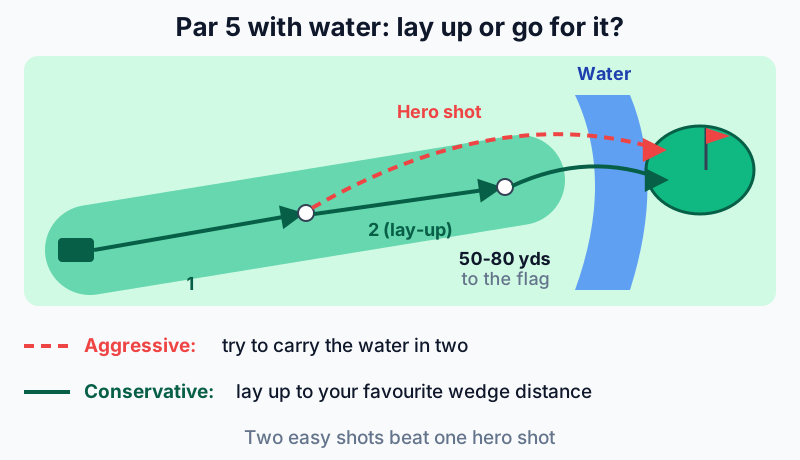
- Par 5 with water in front of the green: Lay up to your favourite wedge distance (50-80 yards). Two easy shots beat one hero shot.
- Long par 4 with trouble around the green: If you can't comfortably reach the green in two, lay up to 80-100 yards and pitch on.
- Any approach where you'd need your absolute best strike to clear a hazard: Lay up. If the shot needs your best strike, you probably won't produce it when it counts.
The golfer shooting 95 tends to aim at the flag from 200 yards. The golfer shooting 85 is more likely to hit a comfortable 8-iron to 100 yards, then wedge it close.
The Bogey Is Your Friend
This is the hardest mental adjustment for mid-handicappers: a bogey on a hard hole is a win.
On the hole rated hardest on the course by stroke index, a bogey is a good score for a golfer trying to break 90, and par is a bonus. Stop trying to par every hole. Aim to bogey the hard ones and par the easier ones.
How Much Should I Practise to Break 90
The short answer is 2-3 hours a week of structured practice, plus one round.
Short, frequent sessions beat occasional marathons: a meta-analysis of 63 studies found spaced practice outperformed massed practice. I'd suggest 20-30 minutes per session, 4-5 days a week. That's 100-150 minutes of practice a week.
The split matters more than the total:
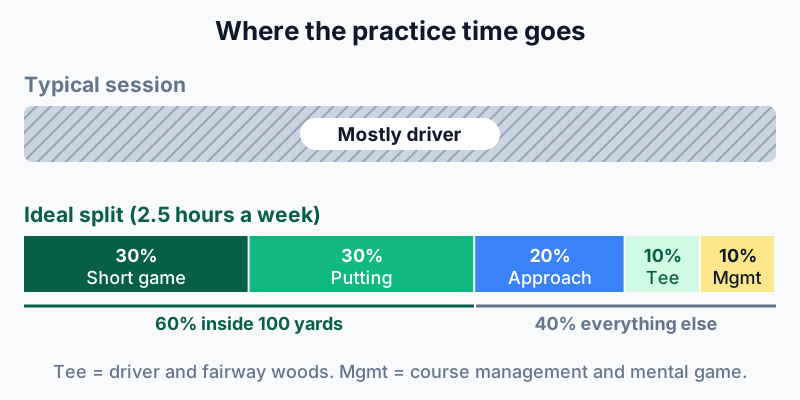
| Practice Area | % of Time | Weekly Minutes (based on 2.5 hrs) | Why | |--------------|-----------|-----------------------------------|-----| | Short game (chips, pitches) | 30% | 45 min | Fastest stroke savings for mid-handicappers | | Putting | 30% | 45 min | Eliminates three-putts, improves up-and-down conversion | | Approach shots (irons) | 20% | 30 min | Increases GIR, sets up easier putts | | Tee shots (driver, fairway woods) | 10% | 15 min | Maintain existing skill, don't chase distance | | Course management and mental game | 10% | 15 min | Review scorecards, plan strategies, visualise |
That 60/40 split (60% inside 100 yards, 40% everything else) isn't arbitrary. It reflects the Shot Scope data above, where much of the gap between 90s and 80s golfers shows up around and on the green.
If you can only practise three days a week, prioritise putting and chipping. For a mid-handicapper, those two areas give you the best return for your time.
Common Mistakes That Keep Golfers Stuck at 90-95
The same patterns come up again and again on golf forums and in golf instruction. These five mistakes explain a lot of "stuck" mid-handicappers.
Chasing Distance Instead of Accuracy
You can hit your driver 240 yards, sometimes. Other times it goes 200 and left, or 260 and right. That inconsistency is how penalty shots pile up.
The golfer who hits it 210 down the middle every time has a big advantage. They know which club they're hitting next, they avoid penalties and they play from the fairway instead of the rough.
Stop chasing the 240-yard drive and start owning the 210-yard fairway finder.
Ignoring Wedge Distances
Ask a 95-shooter how far they hit their pitching wedge and they'll probably say "120 yards." But do they know their sand wedge from 50 yards, or their gap wedge from 70? Often not.
The scoring zone is 40-100 yards. If you don't know your distances in 10-yard steps through that zone, you're guessing on some of the most important shots of every round.
Spend one range session hitting 10 balls with each wedge at half, three-quarter and full swing. Write down the averages. Knowing those numbers takes the guesswork out of those shots.
Three-Putting From Inside 30 Feet
Golfers who shoot in the 90s average 2.3 three-putts per round, according to Shot Scope. That's more than two shots given away. The fix is usually better speed control on the first putt rather than better green reading.
If your first putt from 30 feet finishes within 3 feet of the hole, you'll rarely three-putt. Practise lag putting (rolling the ball the right distance) and those three-putts become much rarer.
Going for the Pin Every Time
The flag isn't your target. The green is, and more specifically the fattest part of it.
Aiming at a pin tucked behind a bunker is a 90s-golfer move. Aiming at the centre of the green with a safe club is an 80s-golfer move. The first can leave you a chip from sand or a buried lie, while the second leaves you a 30-foot putt. Take the 30-footer, two-putt for par or bogey, and move on.
Not Tracking Strokes Gained by Category
If you don't know where you're losing shots, you're practising blind. After every round, count four numbers:
- Fairways hit (out of 14)
- Greens in regulation (out of 18)
- Total putts
- Up-and-downs converted (out of attempts)
Those four numbers tell you what to practise next week. Without them, you're guessing. Many golfers who note these numbers for a month are surprised by where their shots actually go.
What Should My Practice Split Look Like
A common misconception in amateur golf is that more range time means lower scores. The numbers above suggest otherwise.
Here's how three practice splits are likely to compare for a golfer shooting in the 90s:
| Practice Split | Likely Effect | Why | |---------------|-------------------|-----| | 80% range, 20% short game | Limited | Improves ball striking but ignores where strokes are lost | | 50% range, 50% short game | Solid | Balanced approach, solid improvement | | 40% range, 60% short game | Fastest | Targets the actual scoring areas, fastest results |
The 60% short game split works because of how scores are built. Even PGA Tour players hit only around 64% of greens, roughly 11 or 12 per round. Golfers who shoot in the 90s average 3.6, which means chipping, pitching or scrambling on around 14 holes. Save one more shot on just 3 of those holes and a 92 becomes an 89.
In my view, a golfer who spends 60% of their time inside 100 yards and 40% on full swings will usually break 90 sooner than one who does the opposite.
A structured range routine makes the 40% you spend on full shots count too.
Sources & Further Reading
- GolfLink: Statistics and Strategies for Breaking 90: Cites the National Golf Foundation figure that about 26% of golfers break 90
- Shot Scope: Benchmarks for Success: GIR, three-putts, chips and tee-shot data for golfers scoring in the 100s, 90s, 80s and 70s
- Golf Monthly: How Often Do Amateur Golfers Get Up and Down From Inside 50 Yards?: Shot Scope up-and-down rates by handicap
- The Left Rough: The Truth About Greens in Regulation: PGA Tour GIR benchmarks
- Donovan & Radosevich (1999), Journal of Applied Psychology: Meta-analysis of spaced vs massed practice
- Golf Monthly Tips and Instruction: Evidence-based technique and practice articles
Related Articles
- How to Break 100: The Strategy Guide for High Handicappers
- Building a Consistent Golf Practice Habit
- Golf Chipping Tips: Master Your Short Game in 30 Days
- Golf Putting Drills: 10 Drills to Eliminate Three-Putts
- Driving Range Practice Routine: How to Make Every Bucket Count
- The Seinfeld Strategy: Why "Don't Break the Chain" Works for Golf
- Best Golf Rangefinders: GPS vs Laser Compared
Frequently Asked Questions
How long does it take to go from 95 to breaking 90?
Many golfers can make that jump within a few months of structured practice. It depends on how often you practise and whether you focus on the right areas. Prioritising the short game and putting over range sessions should speed things up.
What handicap do I need to break 90?
It depends on the course. A handicap index is based on the best 8 score differentials from your last 20 rounds, so it reflects your better rounds rather than your average one. That means a golfer who regularly shoots around 90 will usually carry a handicap noticeably lower than 18. Regularly breaking 90 would put you in roughly the top quarter of golfers: the National Golf Foundation puts the share who regularly break 90 at about 26%. Many recreational golfers never reach that milestone.
Is it harder to go from 100 to 90 or from 90 to 80?
Going from 90 to 80 is much harder. Breaking 100 is mostly about avoiding disasters, and breaking 90 needs a reliable short game and course management. Breaking 80 asks for consistent ball striking, precise distance control and a very good short game. Each 10-shot improvement needs more refined skills.
Do I need new clubs to break 90?
No. New equipment rarely makes a big difference for a mid-handicapper. Sensible wedge gapping, with your wedges spaced 4-5 degrees apart, matters more than brand or age. A fitted putter can help, but improving your stroke matters more than the equipment.
What is the most important shot for breaking 90?
The 40-80 yard pitch. It's the shot you often face after failing to reach a par 4 in two. According to Shot Scope, golfers who shoot in the 90s miss around 14 greens per round. Getting the ball within 10 feet from this range turns bogeys into par saves, and it comes up on almost every card.
Should I take lessons to break 90?
A few targeted lessons can speed things up, especially for short game technique. Look for a PGA professional who focuses on scoring as well as swing mechanics. One or two lessons on chipping and wedge distance control will often give you more than a full swing overhaul.
Can I break 90 without hitting greens in regulation?
Yes, but you'll need a good short game. If you convert 30-40% of your up-and-downs, you can break 90 while hitting only 2-3 greens in regulation. It's a legitimate path, and it's why short game practice pays off so well for mid-handicappers.
How many penalty strokes can I take and still break 90?
On a par-72 course, breaking 90 means staying at +17 or better, and each penalty stroke eats straight into that budget. Two penalty strokes are manageable, while four make breaking 90 very difficult. Keeping penalties to 0-2 per round should be a core goal alongside short game improvement.
Disclaimer: This article is for informational purposes only and does not replace professional golf instruction. Individual results will vary based on ability, practice consistency, and physical condition. Consult a PGA professional for personalised swing advice.
Ready to build your practice streak?
Track your sessions, set goals, and improve with Green Streak — completely free.
Get Started Free